RESOLUTION based on the results of the International Forum on the Security of Cultural Heritage “War in Ukraine: Battle for Culture”
On February 8-9, 2023, the first international forum took place in Kyiv: “War in Ukraine. Battle for culture”. It became a large-scale informal platform for the communication of fighters of the cultural front. Over the course of two days, more than one and a half hundred participants from Ukraine and abroad discussed the challenges in the task of preserving cultural heritage today and responding to them, summed up the difficult war year that has passed.
He acted as a partner of the Forum All-Ukrainian Democratic Forum.
The result of the discussions, which were attended by about 200 specialists from Ukraine and abroad, initiated by the Heritage Rescue Headquarters and the Maidan Museum with a number of Forum partners, was the creation of Resolutions following the results of the International Forum on the Security of Cultural Heritage “War in Ukraine: Battle for Culture” February 8-9, 2023. The purpose of this document was formulated by the participants of the forum – it was a step towards the formation of a road map for the preservation, rescue, stabilization, restoration and development of the cultural sphere of Ukraine.
We share with you the text of the Resolution
RESOLUTION
according to the results of the International Forum on the Security of Cultural Heritage “War in Ukraine: Battle for Culture”
February 8-9, 2023
February 24, 2022 became a turning point not only for Ukraine, but also for the world. Despite all the motives invented and voiced by Russian propaganda, it is obvious that the main reason for the war is Russia’s intention to destroy Ukraine as a sovereign state, and Ukrainians as an independent and free nation.
With this in mind, Ukraine’s culture, especially its cultural heritage, is a separate target for the Putin regime and will remain under attack until it capitulates and ceases its hybrid aggression, both armed and propaganda.
Despite its potential vulnerability in times of crisis, the culture has not become defenseless, has demonstrated its resilience and ultimately its ability to shape its own agenda. Cultural workers, volunteers, soldiers, local communities, thousands of caring people show their civic responsibility, and in many cases, real heroism in protecting the culture and cultural heritage of Ukraine.
At the same time, the solidarity of the whole world, international assistance in saving and preserving the culture of Ukraine during the war is unprecedented in intensity and scale.
In responding to the actions of the aggressor’s army, Ukraine is guided by world experience laid down in the norms of international law, namely the Hague Convention on the Protection of Cultural Property in the Event of Armed Conflict of 1954, the First and Second Protocols to it.
The realities of a full-scale war testify to the ineffectiveness of those provisions of the Hague Convention, which refer to the obligation of the contracting parties to refrain from any hostile acts in relation to cultural values, looting, theft, their illegal appropriation, acts of vandalism in relation to them, etc. However, it is precisely these legal norms that make it possible to classify such actions of Russians as crimes, accordingly, this imposes an obligation on both Ukraine and the international community to make efforts to investigate each such recorded crime and bear responsibility for it.
This Resolution is the result of discussions in which about 200 specialists from Ukraine and abroad participated within the framework of the Heritage Rescue Headquarters and the Maidan Museum with a number of Forum partners.
The purpose of this document is not only to give a final analysis of the problems, challenges and work done, but also to become a step towards the formation of a road map for the preservation, rescue, stabilization, restoration and development of the cultural sphere of Ukraine.
Today, Ukraine is becoming a kind of testing ground for calibration, revision, testing and adaptation of international principles and methodologies for responding to challenges facing cultural heritage in territories where large-scale and active military operations are being conducted. We are obliged to use the acquired experience, both positive and that which includes mistakes and losses, to update and develop the system for responding to threats and the loss of cultural values.
Especially important is the experience of solidarity and partnership both within the national cultural community and at the international level. The most important lesson of this experience is that algorithms, instructions and action plans are very necessary, but they will never anticipate all possible challenges and situations. So, in the end, everything depends on people – motivated, professional, ready to make operational decisions, participate in their implementation and be responsible for it, people who, at the level of their own competences and capabilities, consider it their duty to respond to other people’s troubles and problems.
Also, an obvious conclusion is that the activities for preservation and protection of cultural heritage should be controlled and coordinated by the state. However, this control and coordination will never be effective without proper and maximally open communication with all subjects of the process – managers and employees of cultural institutions, members of professional public organizations, volunteers, representatives of local self-government bodies, central, military and law enforcement authorities. This communication cannot be fragmented and one-sided, but must work as an effective system that ensures communication at all levels and contributes to the adoption of the most effective operational decisions.
Forum participants agreed on the urgent need for the formation of a national doctrine for the protection of cultural heritage – a strategic document that takes into account Ukrainian and global experience in responding to emergency situations, the dynamics of technological progress, the opportunities and challenges of globalization and glocalization, the existing world system for the protection and preservation of cultural heritage in crisis conditions.
The doctrine should include the following stages:
● functioning in non-crisis conditions and preparation for a crisis;
● crisis response;
● stabilization and recovery.
The key principle of the doctrine: the preservation, transmission, promotion and development of cultural heritage is a matter of national security on a par with territorial integrity, preservation of the independence of Ukraine, its democratic and legal system, humanitarian and environmental security. Moreover, it is the cultural “firmware” of the nation that forms society’s understanding of the importance of all these values and the ability to protect them. The cultural heritage created and handed over to us, the saved and revived historical memory made possible the existence of Ukraine in the past and in the present, and became the basis for the development of Ukraine in the future.
The thematic priorities of the doctrine constitute four groups, according to which a list of components, tasks and principles is proposed, which are fundamental, but not exhaustive.
I. Objects of cultural heritage: architectural, historical and archaeological monuments; museum collections, archives and libraries; museum objects and works of art, etc.; knowledge and traditions, historical memory, oral folk art, crafts, national cuisine, art centers and schools, etc.:
● unified storage and accounting system;
● the evacuation algorithm of movable objects of cultural heritage, the formation of strategic stocks of the necessary materials and equipment for evacuation and the network of equipped storage facilities;
● digitization of 100% of units of the Museum Fund of Ukraine, the National Archive Fund, immovable monuments (primarily accounting documentation);
● centralized accumulation and preservation of digitized data with a system of information protection measures, an approved procedure for verification of digital content. Compliance of databases with European standards, ensuring the transfer / transcoding of data into databases according to the new standard;
● a single online register of the state part of the Museum Fund of Ukraine;
● creation of a national catalog of real monuments with online access and digitization data (scans, photos, 3D models, video and audio materials, etc.);
● unified instructions regarding processes and requirements for digitization, creation of databases, metadata schemes in various areas;
● systematic documentation of losses, damages and risks – creation of reports, universal protocols, available tools; formation of a single register of losses;
● preserving damaged objects, stabilizing them, preventing unauthorized repair/demolition, preparing for their restoration;
● a systematic policy for tracking and returning cultural values taken out and stolen both in this war and in the past;
● timely museification, memorialization and popularization of significant events, objects and phenomena of the modern war.
II. Specialists are museum, library and archive workers, cultural figures, restorers, preservationists, heads of cultural institutions, specialized officials of all levels, public experts, researchers, bearers of knowledge and traditions, etc.:
● measures for systematic targeted support and protection of cultural workers in war conditions, especially displaced persons and persons from occupied / de-occupied territories;
● balance of responsibilities and delegated powers for heads and employees of institutions, action protocols;
● practical and realistic up-to-date instructions for actions in case of emergency situations, the need for evacuation;
● ensuring the development of personnel and institutional capabilities, exchange of experience at the regional, national and international levels;
● a policy aimed at increasing the status in society and decent remuneration of workers in the cultural sphere and the monument protection industry, which would make these institutions competitive in attracting highly qualified and motivated personnel;
● provision of quality education in the field of cultural heritage preservation, introduction of new specialties in higher educational institutions, activation of informal education in this field;
● creation of professional networks of specialists for communication, exchange of experience, partnership, interaction.
III. Institutions – the state system of preservation, protection, promotion and development of cultural heritage: the vertical of the central state authority, cultural units in local self-government bodies, cultural institutions (museums, archives, libraries, theaters, cultural centers), restoration and preservation institutions, public organizations, unions, associations, etc.:
● development of a national strategy for the preservation of cultural heritage in emergency situations;
● creation and activation of the national response system to emergency situations in the field of culture;
● determination of the ratio of centralization / decentralization in terms of responsibility and resources in the matter of security of the cultural sphere;
● a clear, coordinated and legalized emergency response system; introduction of instructions, methodological materials and protocols that take into account the experience of limited time, resources, personnel, communication capabilities and are based on international standards, etc.;
● documenting attacks on cultural heritage, especially those that are potential war crimes and committed against cultural heritage protected by international conventions;
● reform of the museum, monument protection and restoration industries;
● determination of the mechanism of coordination and interaction of all relevant parties and institutions at the horizontal and vertical levels;
● intensification of civil-military cooperation;
● creation of special units in the Armed Forces of Ukraine for the preservation of cultural heritage (similar to CPP units);
● a set of informational and educational activities for military personnel with the aim of preparing for response and securing cultural heritage objects in the territory of military operations;
● preparing for post-war recovery and ensuring the stability of the cultural ecosystem of Ukraine.
IV. The international system of cultural heritage protection is a system of governmental and non-governmental organizations, institutions, as well as norms of international law:
● actualization of the concept of the international system of protection of cultural heritage, deterrence of crimes against culture and response to them;
● coordination of actions to preserve cultural heritage and support culture;
● a centralized and systematic approach to the assessment of cultural heritage damage and billing for reparations;
● creation and systematic updating of the catalog of stolen objects, similar to the Red List of the Cultural Heritage of Ukraine of ISOM, dissemination of information about it at customs, auctions, in the Interpol network in order to prevent illegal trade in cultural values or their appropriation;
● application of all legal instruments to protect cultural heritage and prevent its trade or illegal export during wartime;
● introduction of a clear plan for the restitution of cultural values of Ukraine;
● coordination of efforts to document crimes against culture and help bring perpetrators to justice in international courts;
● expansion of sanctions against the aggressor and the inevitability of state responsibility for war crimes against culture;
● improvement of national legislation on the protection of cultural heritage, bringing it into line with international norms and practices;
● establishment and activation of the National Blue Shield Committee (Blue Shield Ukraine);
● activation of international partnership in the field of research, training and information exchange, as well as actions to preserve cultural heritage in wartime;
● strengthening support for the Ukrainian cultural ecosystem, including the needs of the culture and cultural heritage sectors in the range of humanitarian support for Ukraine.
The first international forum “War in Ukraine. Battle for Culture” was held in Kyiv
The first international forum “War in Ukraine. Battle for culture” ended in Kyiv. It became a large-scale informal platform for the communication of fighters of the cultural front. Over the course of two days, more than one and a half hundred participants from Ukraine and abroad discussed the challenges in the task of preserving cultural heritage today and responding to them, summed up the difficult war year that has passed.
The partner of the Forum was the All-Ukrainian Democratic Forum.
“For almost a year, foreign governments, international institutions, organizations, and institutions have been closely cooperating with Ukrainian state bodies, cultural institutions, specialists, and volunteers. We were provided with protective equipment, financial and humanitarian assistance, meetings were held… The scale of support is impressive, and we are deeply grateful for it. It is time to check the clocks, realize the lessons of the past year, analyze needs and outline strategies for the near future, strengthen response networks and mutual aid. And all this is for the sake of preserving cultural heritage in war conditions, developing capabilities in quick response, supporting workers and institutions in the cultural sphere, holding the aggressor country accountable, and promoting the sustainable development of Ukrainian culture.”, – noted Ihor Poshivaylo, general director of the Maidan Museum and co-coordinator of the Heritage Rescue Headquarters (HERI).
In less than 12 months of Russia’s full-scale war against Ukraine, about 1,500 objects of cultural heritage and infrastructure, including museums, libraries, and archives, were damaged or destroyed, according to the Ministry of Culture and Information Policy. Such scale of looting and war crimes have not been seen since the Second World War.
“We know that a considerable number of objects of cultural heritage were specifically targeted. Targeted attacks, as well as the banning, confiscation and burning of Ukrainian books, illegal removal of cultural values, archival documents, depriving Ukrainians of access to cultural heritage, Russification of occupied territories are signs of cultural genocide. The war illustrated that cultural heritage, both tangible and intangible, is one of the key elements Therefore, the ICIP initiated the consolidation of this priority at the legislative level – through amendments to the Law on National Security and the adoption of two framework Laws “On the Principles of State Policy in the Field of Cultural Heritage” and “On the Preservation and Restoration of National Memory”. – said Oleksandr Tkachenko, Minister of Culture and Information Policy.
Ukrainian culture has become a target for Russia – this is noted by foreign partners. And they talk about solidarity, joint efforts, an active position and intentions to actively help Ukraine in the future.
“The scale of the loss of the cultural heritage of Ukraine is now enormous. These are losses for both tangible and intangible cultural heritage. Therefore, joint efforts with MKIP and other professionals are very important in the work of preserving heritage, because the coordination of work will make it possible to quickly prepare for restoration.” – said Teresa Patricio, President of ICOMOS (International Council for the Conservation of Monuments and Historic Sites).
“In response to Russia’s aggression against Ukraine, we responded to the humanitarian crisis and are still mobilizing resources at all levels of government. We plan to participate in measures to restore Ukraine’s cultural heritage. We are ready to share our expertise. Because culture is, above all, identity, and it is important to protect it.”, – said Katarzyna Zalyasinska, director of the National Institute of Cultural Heritage in Poland.
Maintaining the attention of the world community to the challenges that Ukraine continues to overcome is one of the most important tasks of the meeting. After all, due to a significant flow of information, in particular about the war in Ukraine, there is a risk that over time partners will lose active interest in such problems.
“What everyone agrees on is that culture should be part of the national security strategy. This is the most important task for everyone – from the ministry to the public sector. The second is financing and supporting the sector. The situation with the outflow of personnel is terrible. The third is the exchange of experience and the use of those principles, laws and standards that Europe currently uses, because we understand that the path to our future integration is irreversible.”, – said Anastasia Bondar, Deputy Minister for Digital Development, Digital Transformations and Digitalization of the Ministry of Culture and Information Policy of Ukraine.
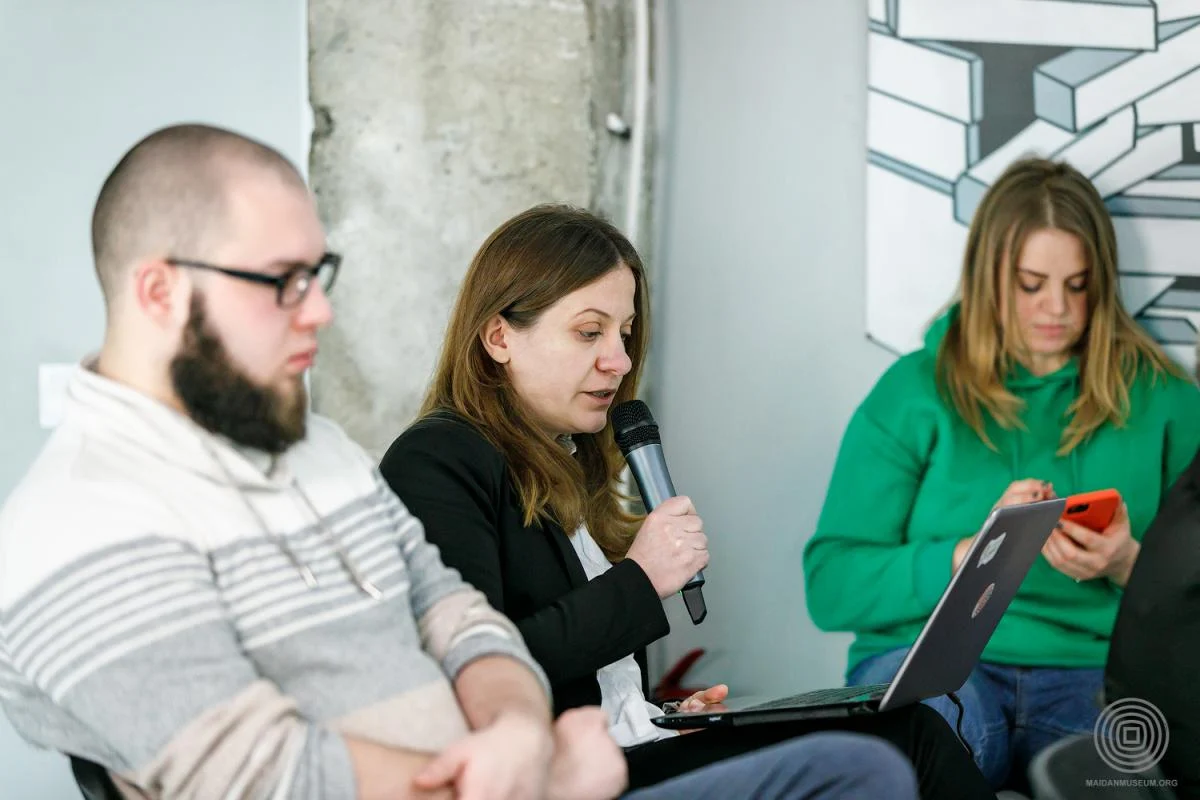
Elmira Ablyalimova, a public figure, an expert of the Crimean Institute of Strategic Studies, is sure that the development of a strategy for the protection of cultural heritage objects is particularly relevant.
“We need a new toolkit on issues of international humanitarian law that will make it possible to prevent the destruction of cultural heritage sites. We need to develop the third protocol of the Hague Convention. It is very important that we all gathered at the forum. We all have very different experiences on this issue, but communication is very important. We all perform different tasks for the same goal – to protect cultural heritage sites.” – said Elmira Ablyalimova.
The forum was attended by representatives of both national museums and rural libraries, nature reserves, regional and local history museums, restoration centers, embassies, international organizations and aid initiatives. Olga Gonchar, the founder and director of the Museum Crisis Center, emphasized the financial challenges faced by specialists in the field and the fact that people of culture are the first on the list of the Russian occupiers to be destroyed. She called to remind about this at all international platforms.
Despite the time difference, it was possible to communicate with participants from the USA and Canada, from Poland, Germany, Sweden and other European countries. At public and closed panel discussions, cultural figures summed up the challenges of a year of full-scale war and outlined plans for the future. Much of the work, especially in closed thematic groups, will remain private for security reasons.
“We worked a lot, but we didn’t talk much with each other. And this is also a problem, because everyone is overloaded here in the country. Especially those who are closer to the front lines, it is very difficult for them to allocate time for thinking about the future, for strategies, for those things that do not apply to the situation right here and now. This forum is the first of a series of events that we can hold to allow ourselves to allocate that time and communicate more with each other.” – said Deputy Minister of Culture and Information Policy Kateryna Chuyeva.
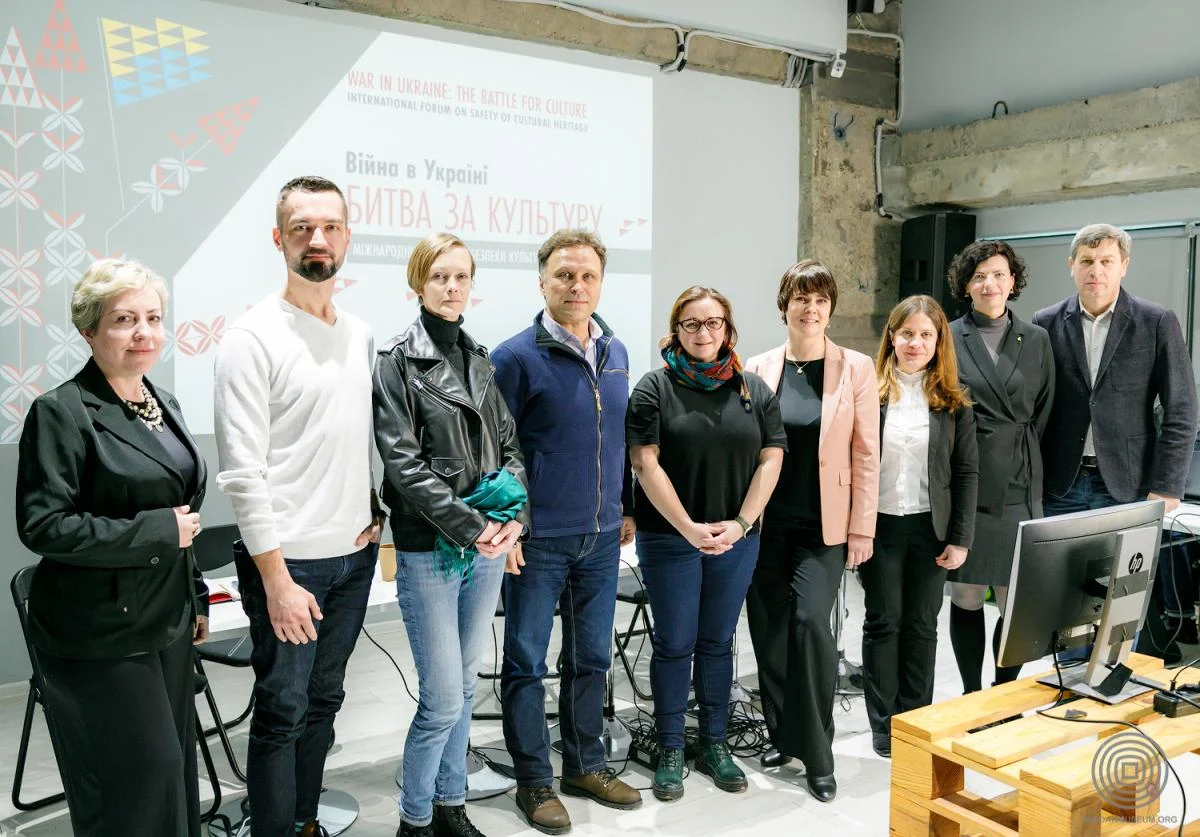
“If earlier we talked about ten-year problems, then, on the one hand, the war provided a unique opportunity: we can do everything today, taking into account completely different realities – internal realities and external realities. The whole world is ready to help us today. Therefore, we need to solve all those problems that have been accumulating for decades, change the infrastructure, create a strategy, start a national system of rapid response to emergency situations in the system, create the same units of military-civilian cooperation. And here really a big field and I think 2023 should be the moment for a big decisive step forward”, – concluded Ihor Poshivaylo.
Organizers:
Heritage Rescue Headquarters, National Museum of the Revolution of Dignity.
Partners:
All-Ukrainian Democratic Forum, Ministry of Culture and Information Policy of Ukraine, Cultural Emergency Response (CER), Smithsonian Cultural Response Initiative, ICCROM, ICOMOS, ICOM, UNESCO, Cultural Heritage International Emergency Force (CHIEF), Cultural Aid Center in Ukraine (Poland), Ukraine Art Aid Center (Germany), ALIPH Foundation, Europa Nostra, World Monuments Fund, Saving Ukrainian Cultural Heritage Online (SUCHO), Heritage for Peace (Netherlands-Spain), ICOM-DRMC, Museum crisis center, Ukrainian Fulbright Circle.
You can view the recording of broadcasts here:
Opening of the Forum
Panel discussions:
“Preservation and Protection”
“Reconstruction and restoration”
“Ukraine is in the spotlight. How to build permanent ties for the future”
FINAL BRIEFING
Photos Maidan Museum
International forum on cultural heritage security “WAR IN UKRAINE: THE BATTLE FOR CULTURE”
We invite you to participate in the International Forum on Cultural Heritage Security “WAR IN UKRAINE: THE BATTLE FOR CULTURE”, which will be held on February 8-9, 2023.
A year has passed since February 24, 2022, around five in the morning, the sleep of Ukrainians was interrupted by powerful explosions. Russian troops launched a massive missile attack on all of Ukraine and crossed its border with tanks. Thus began a full-scale war. Museums, libraries, and archives reacted to the threat according to their capabilities and the military situation, the cultural sphere of Ukraine quickly organized itself: public and volunteer initiatives appeared, which, with the help of local authorities and concerned citizens, turned public space into cultural barricades, protecting monuments and sculptures, facade decorations, and other artistic and historical objects.
The civilized world launched a “cultural lend-lease” for Ukraine. Through volunteer initiatives and directly, various international funds, organizations, institutions and initiatives provided cultural institutions with packing and restoration materials, protective and emergency equipment, hard and cloud storage, humanitarian and financial assistance. Specialists from different countries held meetings, trainings, conferences, consultations to make our culture more stable and resistant to threats and attacks. Ukrainian museums, libraries, archives, scientific and art centers, having received such solidarity and help, began active rescue operations, as well as documenting losses and risks, crimes against culture.
During the 11 months of the war, the Russians destroyed or damaged 1,189 cultural objects in Ukraine, according to data from the Ministry of Culture and Information Policy. Tens of thousands of items were stolen from museum and private collections in the occupied regions. The looting of Ukrainian historical, cultural and artistic values, the purposeful destruction of museums, archives, libraries, theaters, cultural centers, monuments, and religious buildings is a carefully planned military and ideological operation of the Kremlin regime. Ahead are complex processes of stabilization, early restoration and rebuilding of Ukrainian culture, an international tribunal against criminals, restitution of cultural values, and popularization of Ukrainian culture in the world. And also – awareness of the experience of this war and measures to strengthen the stability of culture during the crisis. This requires even greater coordination and partnership. For this purpose, the Forum on the Safety of Cultural Heritage was launched.
The headquarters of the rescue of heritage jointly with the National Museum of the Revolution of Dignity and a number of partners conducts International forum on cultural heritage security “WAR IN UKRAINE: THE BATTLE FOR CULTURE”, which will take place on February 8-9, 2023. Among the partners of the event – All-Ukrainian Democratic Forum.
Purpose of the Forum:
Preservation of cultural heritage in conditions of war, coordination of Ukrainian and international aid initiatives, development of rapid response capacity, support of workers and institutions of the cultural sphere, preparation for recovery and reconstruction, promotion of sustainable development of Ukrainian culture.
Tasks of the forum:
– Summary of activities, starting from February 24, 2022
– A clearer overall picture of needs and situation
– Strengthening the network of response and mutual assistance, coordination of actions
– Based on the results of the working groups – a resolution: summarizing the situation, previous experience and specific proposals for further actions.
The following are invited to participate in the forum:
– heads and employees of museums, archives and libraries
– representatives of international institutions, organizations and foundations that provide assistance to Ukrainian culture in times of crisis
– representatives of Ukrainian aid initiatives to save and promote Ukrainian culture in the war
– representatives of the authorities: central and local authorities, military-civilian administrations
– representatives of the Armed Forces of Ukraine.
The working language of the Forum is Ukrainian and English. Simultaneous translation is planned for all events.
Z program you can get acquainted here
Organizers:
Heritage Rescue Headquarters, National Museum of the Revolution of Dignity.
Partners:
All-Ukrainian Democratic Forum, Ministry of Culture and Information Policy of Ukraine, Cultural Emergency Response (CER), Smithsonian Cultural Response Initiative, ICCROM, ICOMOS, ICOM, UNESCO, Cultural Heritage International Emergency Force (CHIEF), Cultural Aid Center in Ukraine (Poland), Ukraine Art Aid Center (Germany), ALIPH Foundation, Europa Nostra, World Monuments Fund, Saving Ukrainian Cultural Heritage Online (SUCHO), Heritage for Peace (Netherlands-Spain), ICOM-DRMC, Museum crisis center, Ukrainian Fulbright Circle.
Lviv to host a charity auction of Maria Hupalo’s papercut artworks in support of the military
Two unique lots will be available for purchase at the artist’s paper-cut exhibition in support of military medics and families of prisoners of war: portrait of paramedic Taira “Taira is free!” and military medic Maryana Mamonova “Madonna of Mariupol”.
House of the Warrior
city of Lviv
Taras Bobanych St. “Hammer”, 1A
January 20, 2023
15:00
January 20, 2023, at the Warrior’s House in Lviv there will be a charity auction “On the heartbeat line” of Maria Gupalo’s cuttings.
The auction will be presented 2 lots:
work “Taira is free!” (2022)
“Madonna of Mariupol” (2022).
The starting price of lots is 40,000 hryvnias
.
Funds received from the auction will be used to support military doctors and families of prisoners of war.
“Fortress Bakhmut stands no matter what. The self-sacrifice of our soldiers is impressive to the core. Let’s support them as they stand for us.” – calls artist Maria Hupalo.
“A month ago, I just presented the Stanisław Vincenz Prize to the paramedic and volunteer Taira. Yuliia Paievska’s good deeds are an example of humanitarian service, which has now become an act of direct action. Now humanitarianism means serving in the Armed Forces, helping people, both military and civilian, protecting our values and Ukraine.” – noted People’s Deputy of Ukraine Mykola Kniazhytskyi.
In addition, it will take place opening of the exhibition of carvings by the craftswoman Maria Hupalo “Ukraine on Fire”, which will be exhibited at the Warrior’s House from January 20 to February 25.
Moderator
Maria Petryshyn, head of the veteran space Rehub Lviv
Speakers:
Welcome word from Yuliia Paievska (Taira)
Maria Hupalo, the author of vytynanak
Tatusya Bo, blogger, co-founder of BO “Ukrainian Foundation” “Mriya”
Mykola Kniazhytskyi, People’s Deputy of Ukraine
Solomiya Rybotytska, deputy of the Lviv Regional Council
Rostyslav Shmagalo, doctor of art studies, professor of Ivan Franko National University of Lviv
The event was organized by efforts charitable organizations “Ukrainian Foundation”, “Mriya” and “Communities of self-help”, the House of the Warrior and the International Forum of Central and Eastern Europe “Via Carpatia”.
Information partner – Espreso TV channel.
For reference
Maria Hupalo
Maria Hupalo was born and lives in Lviv. She graduated from the Ukrainian Catholic University. By profession, Maria is a teacher of theology, teaches a number of courses at the Faculty of Philosophy and Theology of UCU, as well as separate courses for students of other specialties. She is interested in the connection between religion, ethics and environmental protection. Conducts research in the field of ecotheology, a field that is just emerging in Ukraine.
Passion for vytinany appeared in 2013. Since then, Maria has been creating works in this technique. At some point, inspired by another local artist, Maria invented her own style – a monumental carving. The artist is constantly looking for new forms of expression, paper cutting and processing techniques, new types of materials, experiments with various ethnic, historical and modern styles, as well as with three-dimensional forms. Maria cites the decorative and applied arts of the peoples of the world, in particular the indigenous peoples of North America, and the Ukrainian artistic heritage, especially Easter motifs, among her favorite themes for her work. She incorporates Pysan patterns and embroidery elements from different regions of Ukraine into the composition of her works, using their deep symbolism to better express the idea embedded in one or another work.
Maria is also fascinated by the decorative styles of the beginning of the last century: art deco, modern, avant-garde. Favorite artists include Alphonse Mucha, Gustav Klimt and Egon Schiele. Sophisticated plant motifs, unique wavy geometric patterns characteristic of this style inspired the artist to create the allegorical works “Faith” and “Love”. The influence of these artists is reflected in the style of portraits of Sofia Fredro-Sheptytskyi, the mother of Metropolitan Andrey Sheptytskyi, head of the Ukrainian Greek Catholic Church. These works are in the collection of the charity art project “Prayer to the Metropolitan. Sofia”.
The paintings created in 2021-2022 are the result of the artist’s latest experiments with style and form of expression. These works are meditative, almost iconic, reflecting the artist’s philosophical reflections on self-discovery, meeting and communicating with the Other, the mystical experience of God, the presence and absence of God, love. According to her, tangled lines, blurred contours, transitions of light focusing on the eyes, best allow you to feel the mysterious moment of the Meeting. We let the picture speak to us, discovering more and more images in the whimsical weaves of paper lace.
Now the artist is focused on thinking about the war in Ukraine and how Ukrainians are experiencing it: the displaced and the homeless; military personnel and their families; people who were physically or mentally traumatized by the war; victims of Russian terrorism and atrocities. It depicts how Ukrainians protect their children, their values, what is most precious in their lives, without losing their human face. “Paintings of War” is an ongoing project where the artist interprets the desire of her compatriots for freedom.
Lot #1
Taira is free! (2022)
Paper for pastels, cutout
Yuliia Paievska, better known as Taira, is a paramedic, the founder and leader of the volunteer medical evacuation unit “Taira’s Angels”. Member of the Ukrainian Invictus Games team. Since the beginning of the Russian invasion in 2014, Taira has saved more than 500 lives of Ukrainian soldiers. On March 16, 2022, Taira was captured in Mariupol. Russian media used Taira in their propaganda campaigns. They published videos containing signs of psychological and physical influence on her. The “Save Taira” #SaveTayra #FreeTayra campaign continued in Ukraine and abroad. This piece was planned as part of a campaign for her release, but luckily she was released on June 17th. According to her, the “stone bags” in which Ukrainian military and civilian prisoners are kept are no different from a concentration camp. Prisoners are not allowed to have contact with their relatives, they are not allowed to be transferred, they are tortured. Taira is already free, but hundreds of thousands of deported Ukrainians and thousands of prisoners are not yet, including most of the defenders of Azovstal. Therefore, we must constantly put pressure on Russia to return our people to their homeland.
This picture is exclusive, because it has the autograph of Taira herself. The funds raised from the sale of this painting will go towards the purchase of vitally necessary tourniquets, bandages, occlusive bandages for the stabilization point in Bakhmut.
The starting price is 40,000 hryvnias
Lot #2
Mariupol Madonna (2022)
Pastel paper, acrylic, cut-out, mixed media
The painting depicts Maryana Mamonova, a military medic who was pregnant at the time of the siege of Azovstal and was with her brothers and sisters in the plant’s bunkers. Later, after the extraction procedure, she was captured by the Russians and spent several months in Olenivka. The terms were just right, but the conditions of detention were terrible. What future awaits the child of a prisoner of war? Will they not be separated? But, to the great relief of all Ukrainians, Maryana got on the lists for exchange and returned home on September 21, 2022, along with other released defenders. Soon she gave birth to a daughter. Life conquers death.
The starting price is 40,000 hryvnias
The organizing committee of “Espreso. Readers’ Choice” announced the winner in the “Adult Literature” category
For the first time since independence, Ukrainians began to read more books in their native Ukrainian language. These are the results of the Book Institute’s research for the past year.
For his part, and book award “Espreso. Readers’ Choice” for the fifth season in a row, large and small compatriots are attracted to reading Ukrainian books. As a result, more than seven thousand readers took part in voting for their favorite book.
In the anniversary season, three books competed for the title of the best, according to Ukrainian readers. Ppoetry collection “Aviation Hymn” by Serhiy Zhadan, “Radio Night” by Yuriy Andruhovych and “20+1, or Land of the Dead” by Pavel Volvach.
Not so long ago, the organizing committee received thousands of completed questionnaires with comments from Ukrainian, Jordanian and Norwegian readers. Although the war spoiled the plans of the book award, the organizers are finally ready to announce the name of the winner:
Yuriy Andruhovych – winner of the prize in the nomination “Literature for adults”.
According to the writer, now the war is a time to create one’s own. Time to enrich Ukrainians with their native literature.
More details
The organizing committee of “Espreso. Readers’ Choice” announced the winner in the “Literature for Teenagers” category
More than six and a half thousand teenagers from all over Ukraine cast their votes for their favorite book in the “Espreso. Readers’ Choice” award.
Stories about witchcraft, pagan gods and ancient journeys have become better in the 5th, anniversary season of the award. They were read both in Ukraine and abroad.
These are books “The Enchanted Sword” by Volodymyr Arenev, “Traveling Circus of the Silver Lady” by Natalia Dovgopol and “Wind Mountain” by Anna Bagryana.
Librarians even developed special instructions for voting for a favorite book. And their readers simply swept copies off the shelves.
The organizing committee received thousands of completed questionnaires from readers in the “Literature for teenagers” category. There they shared their impressions of what they had read, criticized and admired the Ukrainian book. Due to the invasion of Ukraine by the Erephy, the award’s organizing committee decided to postpone the award ceremony. However, the organizers are already ready to announce the name of the winner.
The main award of the book award is already going to the publishing house “Our Format” and to the author Anna Bagryana’s winning books. And the writer herself notes that she will continue to write for teenagers abroad, where she is now. After all, now young Ukrainians are in great need of high-quality national literature.
More details
The organizing committee of “Espreso. Readers’ Choice” announced the winner in the “Children’s Literature” category
Book Award “Espreso. Readers’ Choice 2021” became the largest in 5 years of existence.
Almost took part in the competition 21 thousand Ukrainians. Among them: close 7 thousand – children.
The award’s expert jury chose only three finalist books in nominations “Literature for children”.
This “Lost in the camp” by Nastia Muzychenko about a mystical journey in a mountain camp, “Olexa Dovbush. The Secret of Strength” by Vasyl Karpyuk about the Opryshki gang and “The Guinea Pig Detective” by Ivan Andrusiak about sweet tooth Gerard. For three months, young Ukrainians chose their favorite author and book. And our independent observers from Baker Tilly followed the voting.
Children not only from Ukraine, but also from far abroad: Norway and Jordan voted for their favorite book. In addition, thanks to the joint efforts of the public organization “Demforum” and the TV channel “Espreso”, the number of libraries participating in the award increased to 625. Instead, Russia’s full-scale invasion of Ukraine changed the lives of all citizens. But, thanks to our Armed Forces, Ukrainians continue to live, study, work and read. And despite the difficulties, the organizing committee of the book award still announced the winner.
The winner is Ivan Andrusiak shared with us that he was confident of his victory. After all, he also worked as an editor with other prize finalist books. Therefore, the victory of one of them would mean a victory for him as well.
While the award is already on its way to its owner, Ivan Andrusiak continues to surprise children with his stories. During this time, the author managed to publish a new book “Gerard – Partisan”. According to the writer, this book is very important now, because children need to be able to tell about the war.
More details
Canada’s gift to Ukraine: on December 13, outstanding pianist Darius Mazhintas performed in Izyum
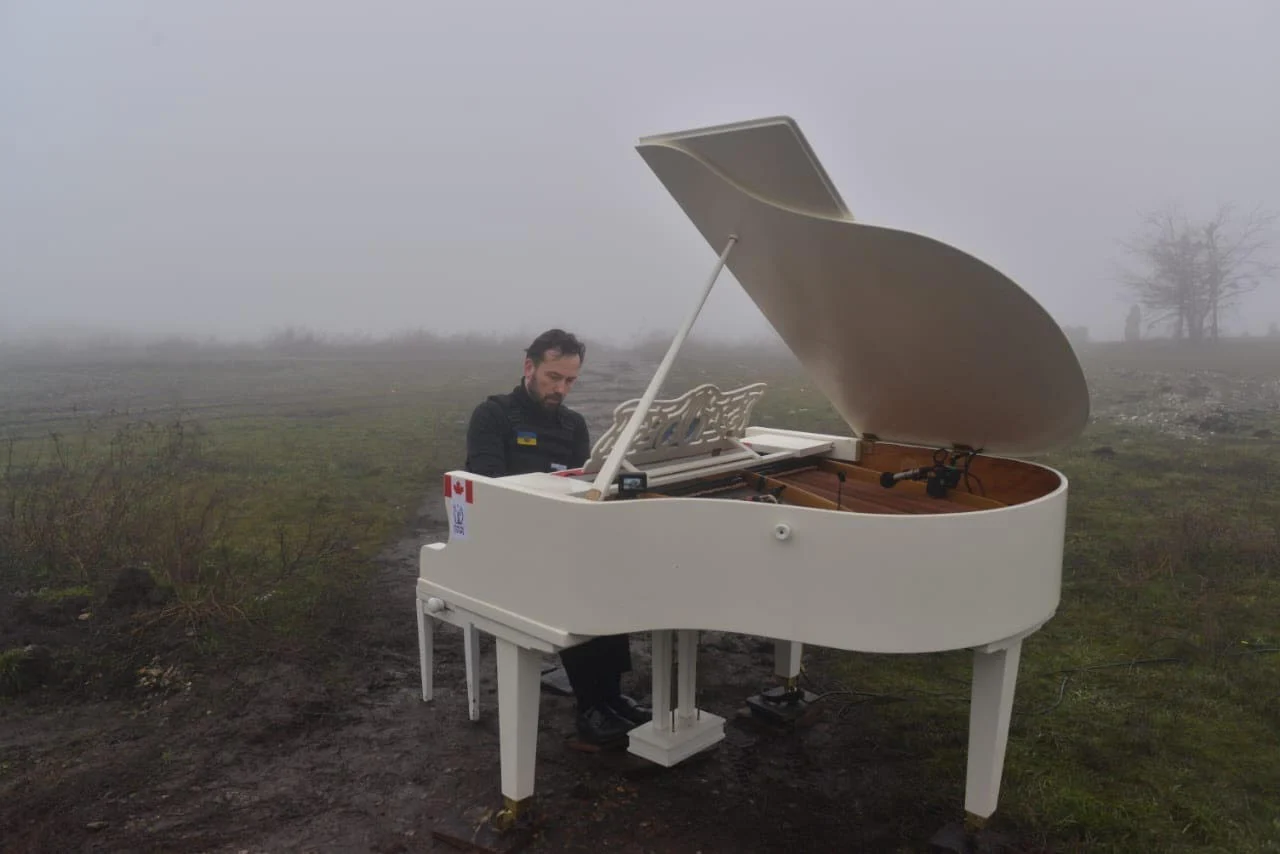
Darius Magintas played compositions in the de-occupied Kharkiv Region from the cycle “Naive Music” by the Ukrainian composer Valentin Sylvestrov.
On December 13, 2022, Kremenetska Mountain in Izyum was covered with fog, but even it could not hide the damage caused by the Russian aggression and occupation to the monuments of sacred art – Polovtsian women and the whole city.
Mr. Majyntas wears dark formal clothes, a black bulletproof vest, with patches with blue-yellow and Canadian flags nearby, allows himself only mittens and performs modern Ukrainian classics for about an hour in the rain, humidity at a temperature of only +5. He chose, passed through himself and practiced these melodies for more than a month.
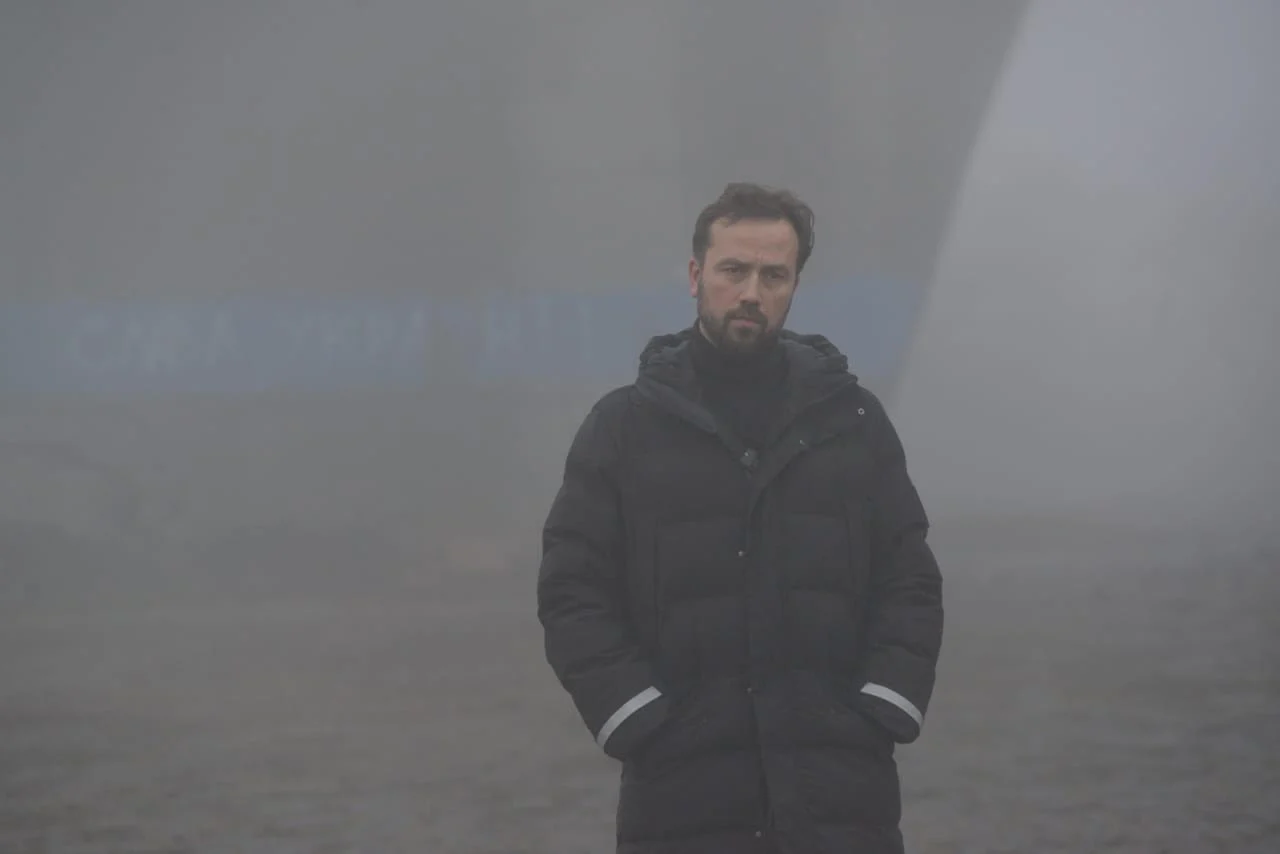
“With the beginning of the war, I became more interested in Ukrainian culture, that’s how I discovered Sylvestrov. In his music, all of Ukraine, its nature and people” – said maestro Magintas. He arrived in Izyum the day before and spent the night with the team in an ancient cellar, which served as a shelter for more than 60 residents of the city during the war and occupation.
The Looking at the Stars Foundation, a Canadian charitable organization based in Toronto, gives classical music performed by first-in-class artists to those who need it most but least expect it.
On April 26, the Looking at the Stars Foundation presented Ukraine first concert classical music – in memory of those who died in the destroyed city of Irpin – and on December 13, they again bowed to the fallen and inspired the living in the city of Izyum.
“On behalf of the board of directors, for the second time, the symbolic gift of classical music – love, respect and admiration – was presented to the steadfast and heroic Ukrainian people, who are tirelessly and selflessly fighting the evil Russian aggression. I am sure that classical music – our only weapon – can be as powerful as HIMARS. It will further revive the steadfast Ukrainians and destroy the psyche and morale of the aggressor. – says Dmytro Kanovich, founder and general director of the “Looking at the Stars” Foundation. – We owe Ukraine every day and minute of our peaceful existence, and with humility and pride we have the opportunity to say “thank you” from the bottom of our hearts. Glory to Ukraine and the Ukrainian people!”
“Music cannot level destruction, but it heals wounds. With this action, we draw attention to the cultural losses suffered by the world’s cultural heritage as a result of Russian aggression in Ukraine. We demonstrate how devastating the war is being waged against the Ukrainian people and our culture. In the global context, we use the world’s attention to get out of the shadow of Russian culture today.” – says Yaryna Yasynevych, co-organizer of the action, head of “Demforum”.
Darius Majintas is always impressed by the resilience of Ukrainians and their ability to preserve humanity and do good even in the darkest times. An example of such resilience is the Izyum volunteer movement.
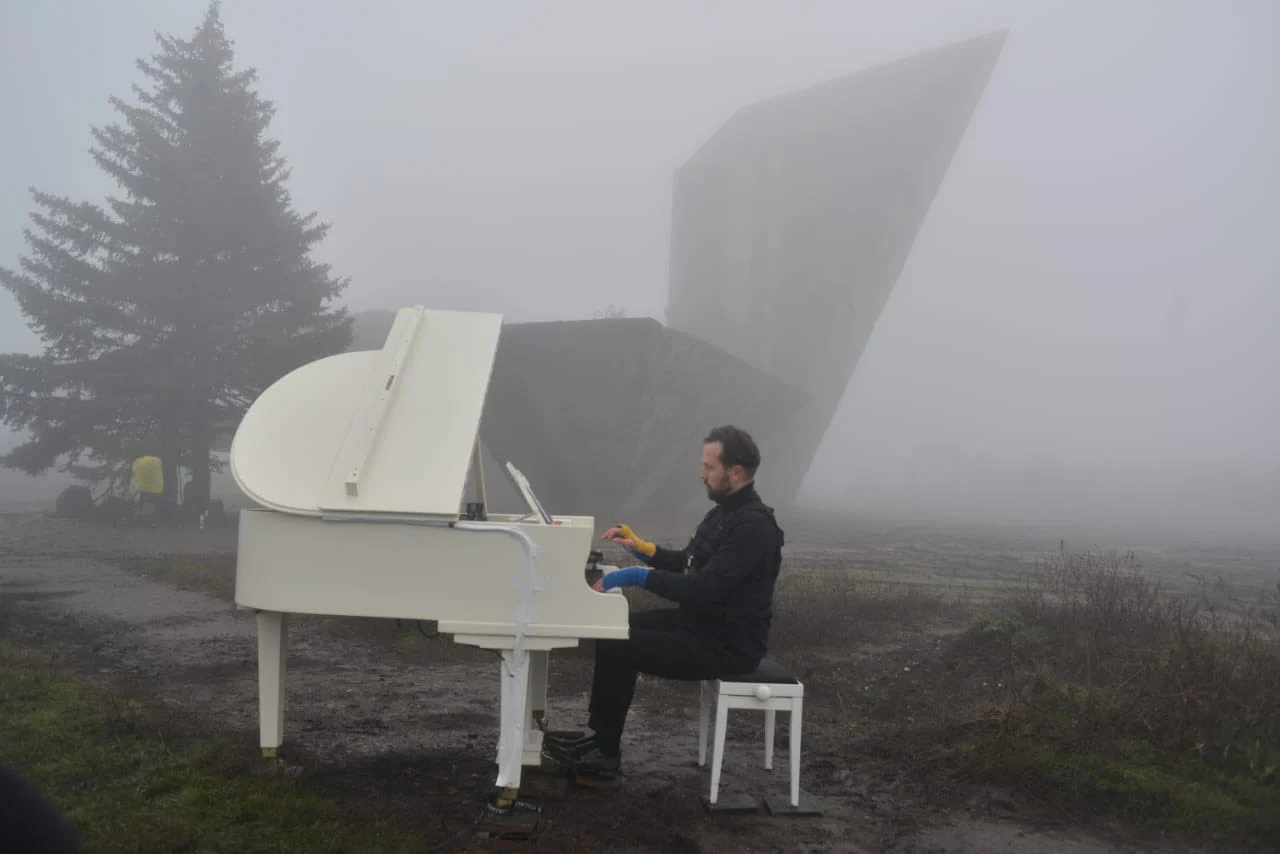
Serhii Shtanko, who remained in his hometown throughout the occupation and helped organize the performance, notes with hope for recovery: “Daily assistance to citizens and drawing attention to the cultural heritage of Izyum is important.”
The speech was organized and financed by the efforts of the Canadian Foundation “Looking at the Stars”, with the assistance of the NGO “All-Ukrainian Democratic Forum” in Ukraine, the volunteer initiative “People-Army” and the Izyum community.
Photos by Yevhen Kotenko, Looking at the Stars Foundation
For reference
“Looking at the Stars” Foundation
Registered in 2016 as a federal charity and based in Toronto. The organization’s mission is to provide world-class classical music to organizations and institutions whose members cannot experience live classical music in a traditional setting, or to those who do not have access to traditional venues.
https://lookingatthestars.org/
NGO “All-Ukrainian Democratic Forum”
A public organization that contributes to the comprehensive development of Ukrainian culture, international cooperation in the field of culture and intercultural dialogue, the development of the media environment in Ukraine, the professional skills of journalists, the increase of quality content, the creation of conditions for the satisfaction and protection of legal, social, creative, national-cultural, economic, legal and other interests of its members and society. And during the war, he carries out volunteer and humanitarian initiatives.
https://demforum.org/
Darius Magintas – Vice-president and artistic director of the Canadian Foundation “Looking at the Stars” in the European Union.
Due to his exceptional musical sensibility and talent, as well as charming forms of expression and unique interpretations, Darius Majintas has already won the recognition of the Republic of Lithuania. A graduate of the Lithuanian Academy of Music and Theater, laureate of numerous national and international music competitions.
The list of music festivals in which the pianist participated included Aspen Music Festival, Westchester Piano Festival (USA), Summerakademie (Germany) and Holland Music Session (Netherlands).
In 2013-2014, he held the position of Deputy Minister of Culture of the Republic of Lithuania. Mr. Majintas has given successful concerts in the great halls of the world, such as the Berlin Philharmonic, Carnegie Hall in New York and London’s Wigmore Hall.
The pianist has recorded several albums, including a solo album in 2011 with works by Bach, Beethoven, and Scriabin.
In 2020, Mr. Majintas joined Looking at the Stars as Vice President and Artistic Director in the European Union and successfully played his first pilot concert in a Lithuanian prison
On December 4, a presentation of the Ukrainian translation of Stanisław Vincenz’s book “Dialogues with the Soviets” was held in Lviv
On December 4, 2022, as part of the International Forum of Central and Eastern Europe Via Carpatia “Culture: Tested by War” at the Frank House in Lviv, a presentation of the Ukrainian translation of Stanisław Vincenz’s book “Dialogues with the Soviets” took place (“Apriori” publishing house, translation by Oles Gerasim, foreword by Andriy Pavlyshyn)
“The outstanding Polish writer Stanisław Vincenz wrote his book after the Second World War in exile. In it, he recreated and reflected on his experience in 1939-1941 – the arrival of the “Soviets”, his arrest as a representative of the “class enemy” (the Vincenz family owned a small business), his release from prison in Stanislaviv (modern Ivano-Frankivsk), mass appeals fellow villagers — Ukrainian villagers, fleeing across the border to Hungary, military wanderings…“, he says the author of the foreword is Andriy Pavlyshyn.
“Dialogues with the Soviets” by Stanisław Vincenz was translated by the famous Lviv translated by Oles Gerasim – relevant for our present.
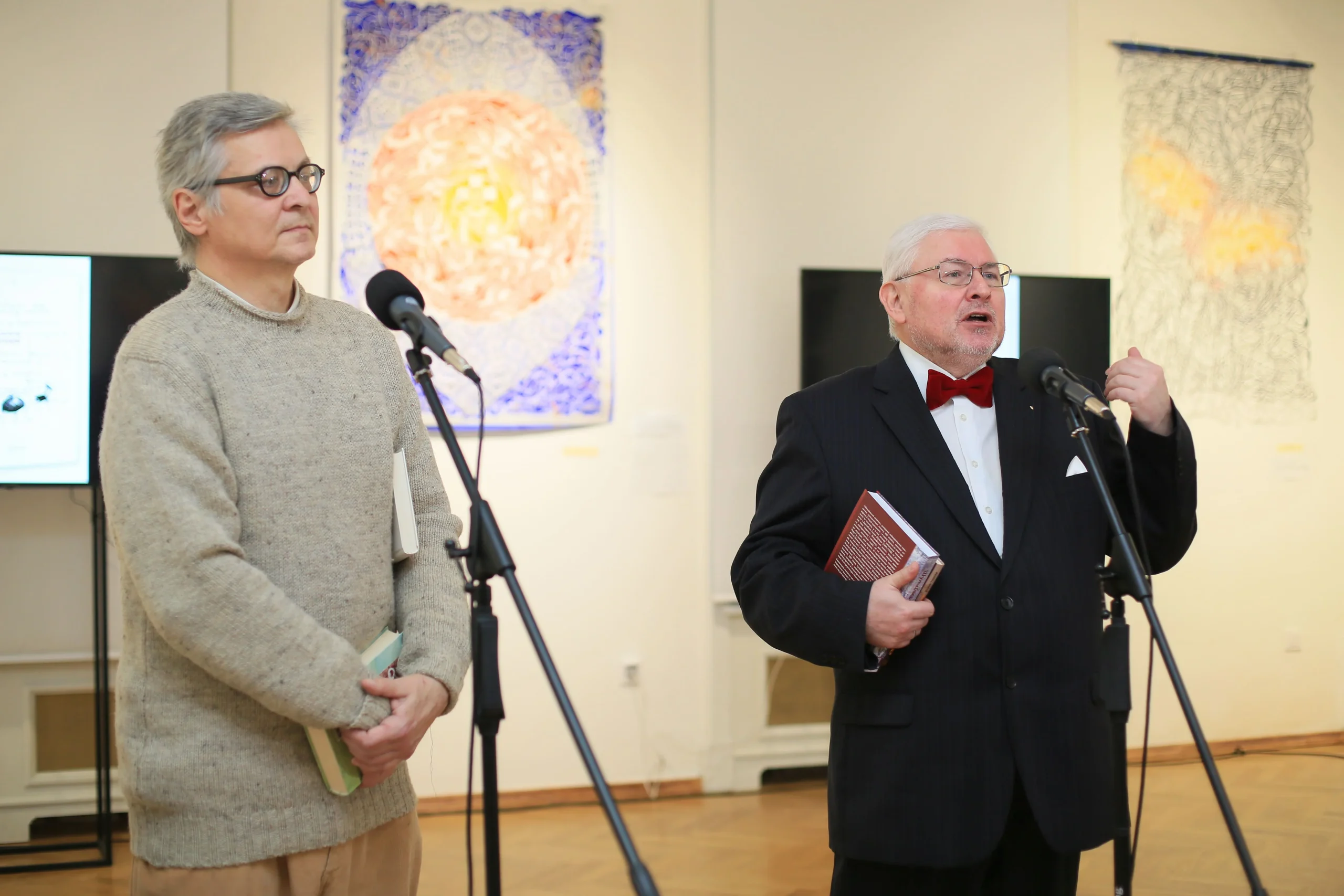
“Stanisław Vincenz was a very interesting figure – he was in love with ancient culture and Hutsul region, which became the background and central image of his tetralogy “On the High Uplands”, – adds Mr. Oles Gerasim.
The book was published with the assistance of a People’s Deputy of Ukraine Mykola Kniazhytskyi and NGO “All-Ukrainian Democratic Forum”.
In addition, on December 4, 2022, the Ukrainian The Stanisław Vincenz Prize “For Humanistic Service and a Contribution to Regional Development” volunteer, paramedic, commander of the Taira Angels unit Yuliia Paievska (Taira).
Organizers
All-Ukrainian Democratic Forum, NGO “Verkhovyna — the flower of the Carpathians”, Frank House in Lviv, Espreso TV channel
Photo by Natalia Yasynevich
The plot of the Espreso TV channel about the presentation of the book by link
The Stanisław Vincenz Prize for Humanistic Service and a Contribution to Regional Development was presented at the Via Carpatia Forum of Central and Eastern Europe, Culture: Tested by War
This year’s Stanisław Vincenz Prize “For Humanistic Service and a Contribution to Regional Development” was awarded to a volunteer, paramedic, commander of the “Angels of Taira” unit – Yuliia Paievska “Taira”.
“I once got hold of an interesting piece of oriental medicine. There was a phrase there that there is nothing in the world that cannot become a medicine. Thinking about it, I thought that there is one more thing that fits these criteria. There is nothing in the world that cannot become a weapon. First of all, for me, weapons are culture. Like medicine, – shared paramedic Yuliia Paievska “Taira” during the presentation of the Vincenz Prize as part of Via Carpatia. – Let culture become our weapon, and weapons – medicine against the Moscow plague. And let these two things show the world the greatness and beauty of the Ukrainian soul.”
Yuliia Paievska dedicated her award, in particular, to Volodymyr Vakulenko, a children’s writer tortured by the occupiers.
“Recently, the body of Volodymyr Vakulenko, killed by the occupiers, was found in Izyum. He is a children’s writer… I don’t think I deserve this great award. But I accept it as a great honor and dedicate it to Volodymyr Vakulenko and all cultural figures who were murdered and killed by the Moscow occupiers.” – said Taira.
“When we conceived this award, we really wanted us to realize the importance of two things. The first, of course, is democracy. Because what is happening now is obviously a struggle against the destruction of Ukraine by the imperial center, but it is also actually the beginning of a world war of authoritarianism against democracy, – said Mykola Kniazhytskyi during the presentation of the prize named after the Polish writer and translator Stanisław Vincenz. – We are called to put an end to authoritarianism in the world. We are Ukrainians, as a nation. As a nation that knows how to love, as a nation that has always understood what democracy is, throughout its history. Because for us, democracy is also everyone’s freedom, and it was not by chance that we named this award after Stanisław Vincenz”.
The Stanisław Vincenz Prize “For Humanistic Service and a Contribution to Regional Development” is awarded for the fifth time to Forum of Central and Eastern Europe Via Carpatia.
The award ceremony took place at the Frank House in Lviv. This year’s award is primarily about how Ukrainians put an end to authoritarianism in Ukraine and in the world.
You can watch the story of the Espreso TV channel about the award ceremony at link
Organizers:
NGO “All-Ukrainian Democratic Forum”, NGO “Verkhovyna – Flower of the Carpathians”, Frank House in Lviv, Espreso TV channel.
Photo: Natalia Yasinevych