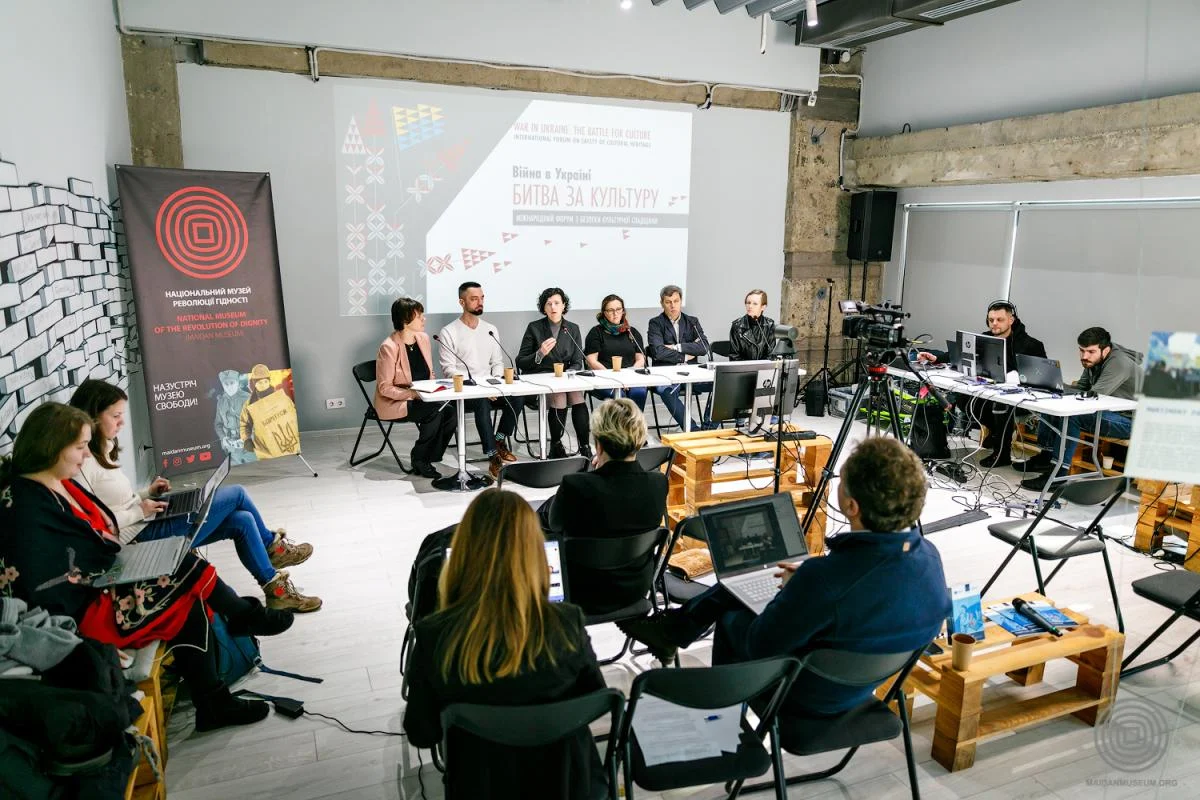
The first international forum “War in Ukraine. Battle for culture” ended in Kyiv. It became a large-scale informal platform for the communication of fighters of the cultural front. Over the course of two days, more than one and a half hundred participants from Ukraine and abroad discussed the challenges in the task of preserving cultural heritage today and responding to them, summed up the difficult war year that has passed.
The partner of the Forum was the All-Ukrainian Democratic Forum.
“For almost a year, foreign governments, international institutions, organizations, and institutions have been closely cooperating with Ukrainian state bodies, cultural institutions, specialists, and volunteers. We were provided with protective equipment, financial and humanitarian assistance, meetings were held… The scale of support is impressive, and we are deeply grateful for it. It is time to check the clocks, realize the lessons of the past year, analyze needs and outline strategies for the near future, strengthen response networks and mutual aid. And all this is for the sake of preserving cultural heritage in war conditions, developing capabilities in quick response, supporting workers and institutions in the cultural sphere, holding the aggressor country accountable, and promoting the sustainable development of Ukrainian culture.”, – noted Ihor Poshivaylo, general director of the Maidan Museum and co-coordinator of the Heritage Rescue Headquarters (HERI).
In less than 12 months of Russia’s full-scale war against Ukraine, about 1,500 objects of cultural heritage and infrastructure, including museums, libraries, and archives, were damaged or destroyed, according to the Ministry of Culture and Information Policy. Such scale of looting and war crimes have not been seen since the Second World War.
“We know that a considerable number of objects of cultural heritage were specifically targeted. Targeted attacks, as well as the banning, confiscation and burning of Ukrainian books, illegal removal of cultural values, archival documents, depriving Ukrainians of access to cultural heritage, Russification of occupied territories are signs of cultural genocide. The war illustrated that cultural heritage, both tangible and intangible, is one of the key elements Therefore, the ICIP initiated the consolidation of this priority at the legislative level – through amendments to the Law on National Security and the adoption of two framework Laws “On the Principles of State Policy in the Field of Cultural Heritage” and “On the Preservation and Restoration of National Memory”. – said Oleksandr Tkachenko, Minister of Culture and Information Policy.
Ukrainian culture has become a target for Russia – this is noted by foreign partners. And they talk about solidarity, joint efforts, an active position and intentions to actively help Ukraine in the future.
“The scale of the loss of the cultural heritage of Ukraine is now enormous. These are losses for both tangible and intangible cultural heritage. Therefore, joint efforts with MKIP and other professionals are very important in the work of preserving heritage, because the coordination of work will make it possible to quickly prepare for restoration.” – said Teresa Patricio, President of ICOMOS (International Council for the Conservation of Monuments and Historic Sites).
“In response to Russia’s aggression against Ukraine, we responded to the humanitarian crisis and are still mobilizing resources at all levels of government. We plan to participate in measures to restore Ukraine’s cultural heritage. We are ready to share our expertise. Because culture is, above all, identity, and it is important to protect it.”, – said Katarzyna Zalyasinska, director of the National Institute of Cultural Heritage in Poland.
Maintaining the attention of the world community to the challenges that Ukraine continues to overcome is one of the most important tasks of the meeting. After all, due to a significant flow of information, in particular about the war in Ukraine, there is a risk that over time partners will lose active interest in such problems.
“What everyone agrees on is that culture should be part of the national security strategy. This is the most important task for everyone – from the ministry to the public sector. The second is financing and supporting the sector. The situation with the outflow of personnel is terrible. The third is the exchange of experience and the use of those principles, laws and standards that Europe currently uses, because we understand that the path to our future integration is irreversible.”, – said Anastasia Bondar, Deputy Minister for Digital Development, Digital Transformations and Digitalization of the Ministry of Culture and Information Policy of Ukraine.
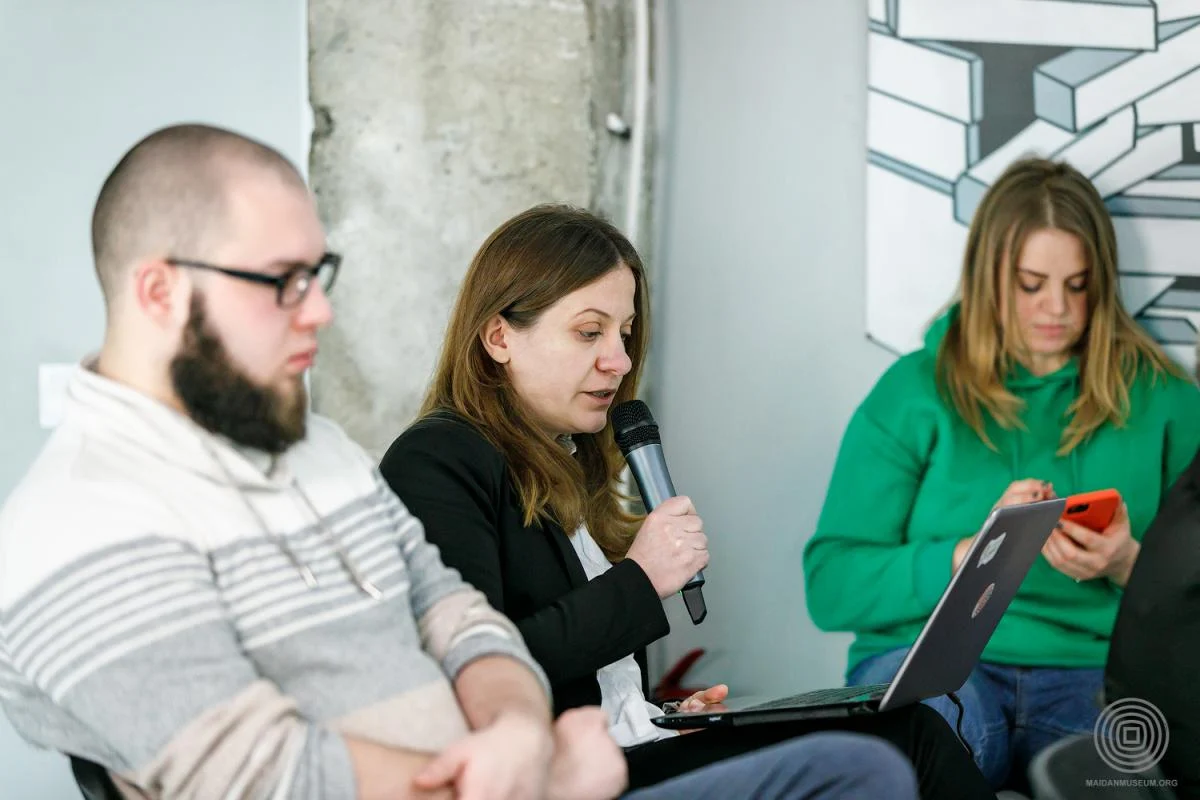
Elmira Ablyalimova, a public figure, an expert of the Crimean Institute of Strategic Studies, is sure that the development of a strategy for the protection of cultural heritage objects is particularly relevant.
“We need a new toolkit on issues of international humanitarian law that will make it possible to prevent the destruction of cultural heritage sites. We need to develop the third protocol of the Hague Convention. It is very important that we all gathered at the forum. We all have very different experiences on this issue, but communication is very important. We all perform different tasks for the same goal – to protect cultural heritage sites.” – said Elmira Ablyalimova.
The forum was attended by representatives of both national museums and rural libraries, nature reserves, regional and local history museums, restoration centers, embassies, international organizations and aid initiatives. Olga Gonchar, the founder and director of the Museum Crisis Center, emphasized the financial challenges faced by specialists in the field and the fact that people of culture are the first on the list of the Russian occupiers to be destroyed. She called to remind about this at all international platforms.
Despite the time difference, it was possible to communicate with participants from the USA and Canada, from Poland, Germany, Sweden and other European countries. At public and closed panel discussions, cultural figures summed up the challenges of a year of full-scale war and outlined plans for the future. Much of the work, especially in closed thematic groups, will remain private for security reasons.
“We worked a lot, but we didn’t talk much with each other. And this is also a problem, because everyone is overloaded here in the country. Especially those who are closer to the front lines, it is very difficult for them to allocate time for thinking about the future, for strategies, for those things that do not apply to the situation right here and now. This forum is the first of a series of events that we can hold to allow ourselves to allocate that time and communicate more with each other.” – said Deputy Minister of Culture and Information Policy Kateryna Chuyeva.
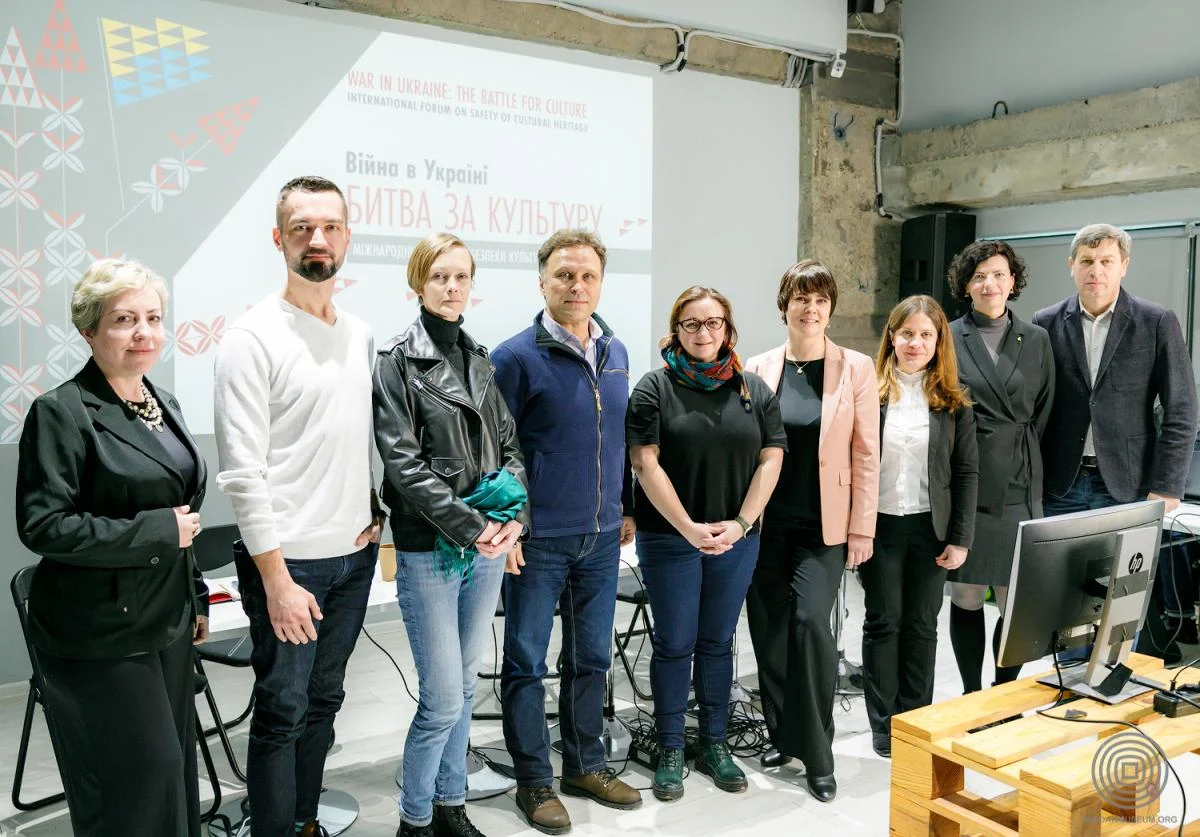
“If earlier we talked about ten-year problems, then, on the one hand, the war provided a unique opportunity: we can do everything today, taking into account completely different realities – internal realities and external realities. The whole world is ready to help us today. Therefore, we need to solve all those problems that have been accumulating for decades, change the infrastructure, create a strategy, start a national system of rapid response to emergency situations in the system, create the same units of military-civilian cooperation. And here really a big field and I think 2023 should be the moment for a big decisive step forward”, – concluded Ihor Poshivaylo.
Organizers:
Heritage Rescue Headquarters, National Museum of the Revolution of Dignity.
Partners:
All-Ukrainian Democratic Forum, Ministry of Culture and Information Policy of Ukraine, Cultural Emergency Response (CER), Smithsonian Cultural Response Initiative, ICCROM, ICOMOS, ICOM, UNESCO, Cultural Heritage International Emergency Force (CHIEF), Cultural Aid Center in Ukraine (Poland), Ukraine Art Aid Center (Germany), ALIPH Foundation, Europa Nostra, World Monuments Fund, Saving Ukrainian Cultural Heritage Online (SUCHO), Heritage for Peace (Netherlands-Spain), ICOM-DRMC, Museum crisis center, Ukrainian Fulbright Circle.
You can view the recording of broadcasts here:
Panel discussions:
“Reconstruction and restoration”
“Ukraine is in the spotlight. How to build permanent ties for the future”
Photos Maidan Museum