Taiwan Invests in Ukrainian Education | Leave No One Behind Project
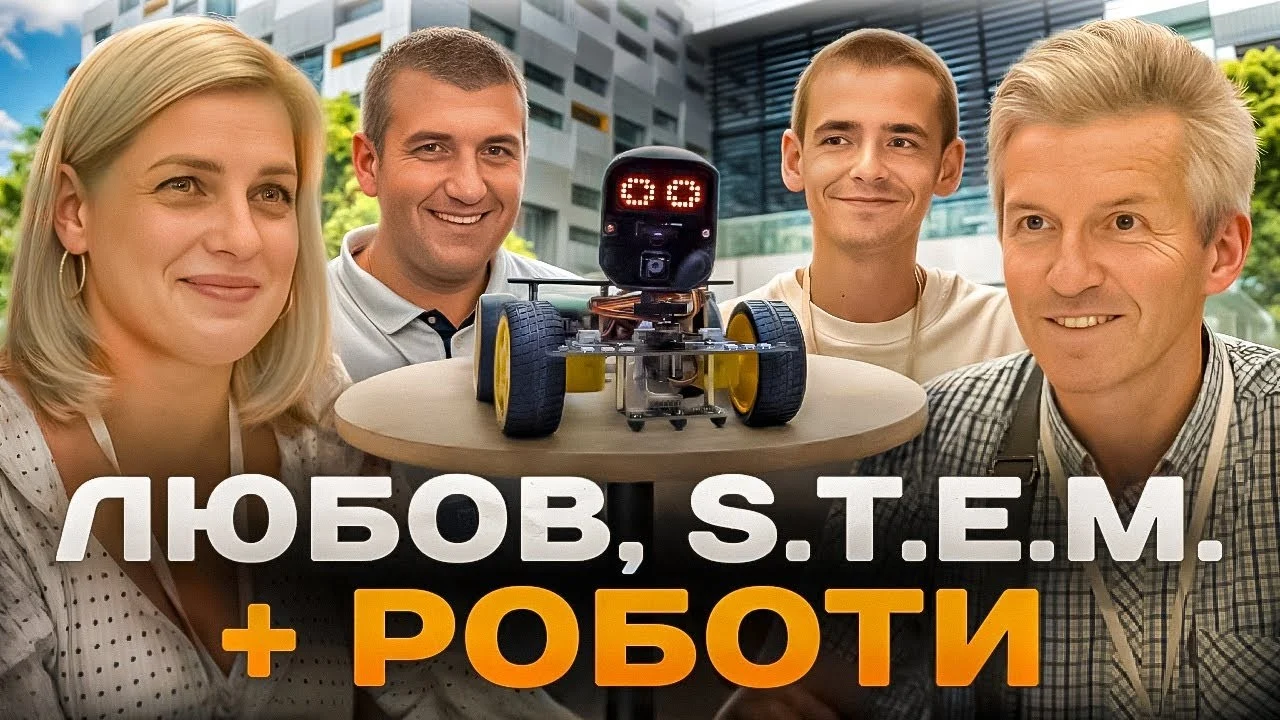
How do teachers learn programming, STEM and robotics, and schools get state-of-the-art equipment? In Mykola Kniazhytskyi’s video, there are stories of participants in the Ukrainian-Taiwanese project “Leave no one behind partnership”.
The future of children and the quality of education: what worries Ukrainians the most
Ukrainians are most concerned about the risk that children will grow up in poverty in the future. This is evidenced by the results of the new study “Common contours”, which was conducted by specialists of the Sociological group Rating Group. “In the conditions of the war, Ukrainians most acutely perceive the risk that children will grow up in poverty in the future – 88% are concerned, in particular 74% are very concerned,” sociologists note. For comparison, among EU citizens, about 40% of respondents are concerned about the topic of child poverty.
Education is one of the key concerns in the context of the country’s future. 85% of Ukrainians are concerned about the quality of children’s education, and 59% called their concern very strong. This indicates a high public demand for quality education and opportunities for future generations. It is interesting that, compared to citizens of EU countries, Ukrainians perceive social and economic risks much more acutely.
The top three worries also include the problem of population poverty: 84% of Ukrainians are concerned about it, of which 57% are very concerned.
In many EU countries, the climate topic occupies a more prominent place on the public agenda. The climate and political divisions are also of great concern to Ukrainians, but in war conditions they are relatively inferior to socio-economic and humanitarian issues. If on average in EU countries 78% of citizens are worried about climate change, then in Ukraine – 64%, and only 27% are very worried.
The study shows that Ukrainians today are most concerned about social and humanitarian issues related to the quality of life, the future of children and the development of the country. These topics are increasingly becoming part of the public debate about the future of Ukraine in the European space.
Pedaling for Victory: Verkhovyna to host Bike Day 2026
On Sunday, June 7, a sports and charity event – “Bike Day 2026” will be held in Verkhovyna, Ivano-Frankivsk region. Cycling enthusiasts and local businesses invite everyone who wants to support the Ukrainian defenders with a sporting event.
Bike Day will start at 12:00 on the “Singing Field”. During the event, a charity lottery will be held, and the collected funds will be directed to help the soldiers of the Armed Forces of Ukraine. The cycling race starts at 13:00. Cyclists will ride 24 kilometers along the picturesque roads of the Carpathians.
Organizers of Bike Day: NGO “Alliance of Development”, NGO “All-Ukrainian Democratic Forum”, NGO “Verkhovyna Kvitka Karpat”, Verkhovyna Town Council, information partner – Espreso TV channel.
Certificates, gifts and products from companies are needed to hold a charity lottery. Therefore, the organizers invite local businesses, brands, coffee shops, workshops, catering establishments and all entrepreneurs to join and become partners of the event.
Regarding partnership, contact the phone number: +380979002241
Let’s spin the pedals for Victory!
Vernadsky Library: From early printed books to modern digital services
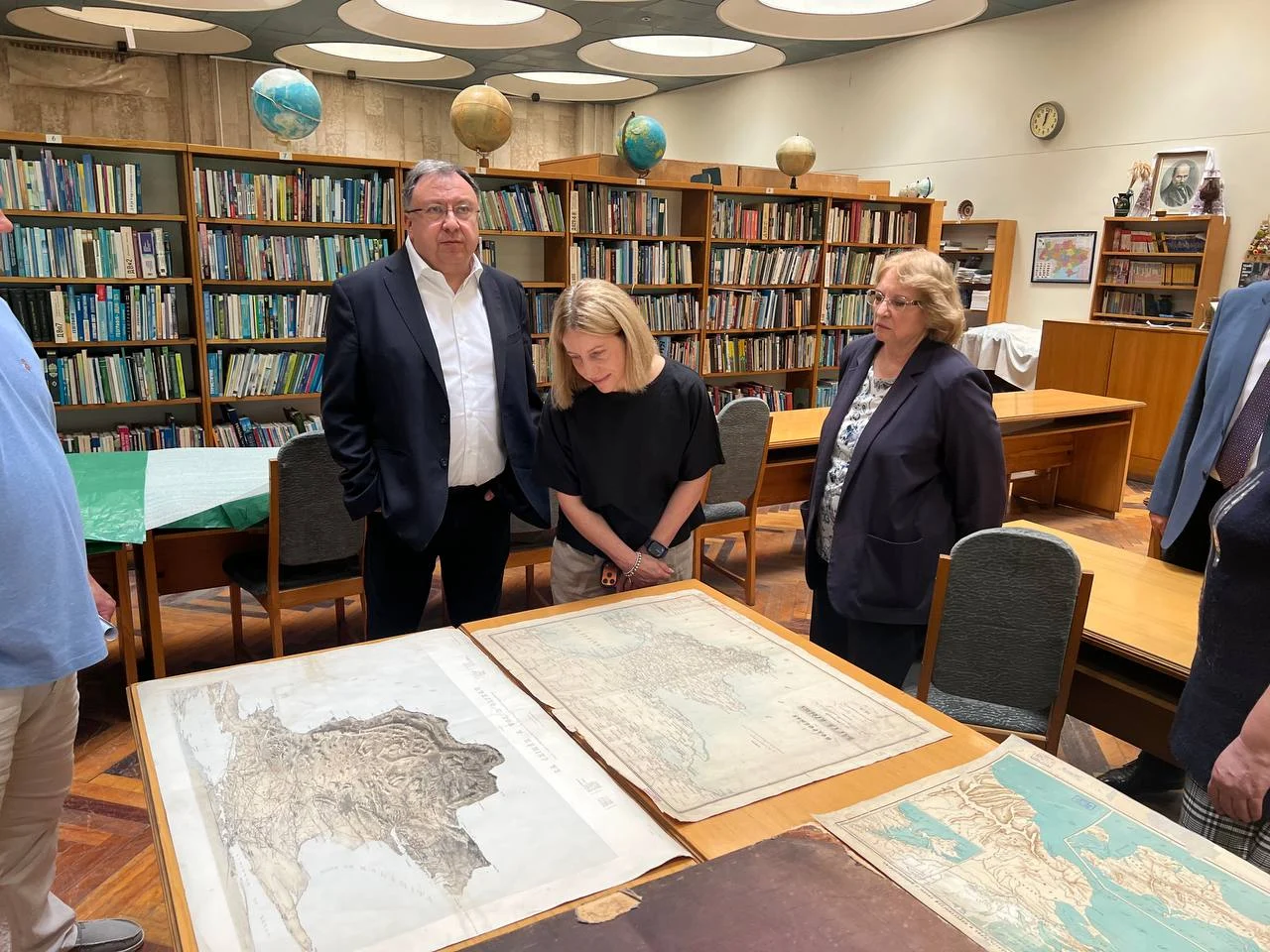
Vernadskyi National Library of Ukraine (NBUV) is the main intellectual and scientific information center of the country. The NBUV team are unique specialists and scientific researchers. They write dissertations, possess rare restoration skills, work with primary sources, and provide state-of-the-art digital services, developing electronic archives for online readers around the world.
Photo by Roman Malenkov, from the website Ukraine incognita.
Despite their high qualifications and academic degrees, librarians’ salaries are low. According to the State Statistics Service, in 2025, librarians and museum workers received an average of only UAH 13,500 per month. In the main scientific library of the country, the salary of an employee is even lower than in ordinary city libraries.
During the adoption of the state budget for 2026, the Verkhovna Rada of Ukraine allocated additional funding for the National Library of Ukraine named after V.I. Vernadskyi and Lviv National Scientific Library named after Vasyl Stefanyk. People’s deputy of Ukraine, head of the subcommittee on cultural policy, Mykola Kniazhytskyi talked with library employees and noted: “We need systemic solutions regarding the payment of labor to people who continue to work in libraries despite all circumstances. They stay because of their vocation.”
Interesting facts:
The National Library of Ukraine named after V. I. Vernadsky is among the TOP-10 largest national book collections.
August 2, 1918 – the official foundation date of the library. On this day, hetman Pavlo Skoropadsky signed the law “On the establishment of the Fund of the National Library of the Ukrainian State” approved by the Council of Ministers of the Ukrainian State.
NBUV publishes up to 40 titles of fundamental scientific works annually.
The funds have about 15.8 million storage units.
In the giant book store, archiving is thought out so that books can quickly reach the reading rooms with the help of internal elevators and conveyors.
The interior of the library is decorated with a unique monumental canvas with an area of 360 square metres, made in the technique of wax painting “Pain of the Earth”. The authors of this philosophical work, Volodymyr Pryadka and Volodymyr Pasivenko, received the Shevchenko Prize in 1998.
Stanisław Vincenz Prize laureate Ivan Malkovych on the Ukrainian state and victory
“I dream of a revived Ukrainian paradise and that in the words “native land” we hear “paradise” and in the word “Ukraine” we hear “paradise”, because these are our paradises,” said poet, publisher and Shevchenko Prize laureate Ivan Malkovych in an interview with “The Ukrainians Media”. On May 10, Ivan Malkovych turned 65 years old, and his legendary publishing house “A-BA-BA-HA-LA-MA-HA” is already 35 years old.
For the Via Carpatia International Forum community, the figure of Ivan Malkovych is special, because in 2019 he became the laureate of the Stanisław Vincenz Prize “For Humanistic Service and Development of Regions”, which is traditionally awarded within the framework of the forum. Malkovych’s many years of work is the embodiment of this award, because every book he publishes gives back to Ukrainians their cultural codes.
Malkovych emphasized that the transformation and courage of Ukraine during the years of full-scale invasion amazes the world.
“At the beginning of the war, we asked to close the sky to us, and now many wealthy countries are already asking us for this, and it sounds like a fairy tale about an ugly duckling, which eventually becomes a beautiful swan in the eyes of the world. And all because we are fighting on the side of truth and light.”
Despite the fact that millions of Ukrainians ended up abroad due to the war, Malkovych is convinced that although some have already managed to settle in new places, many people will still experience this “paradise from afar” and return to rebuild the country.
“So God grant us and our boys who are fighting to hold on and win. I believe that with God’s help everything will be like that,” concluded Malkovych.
A discussion about Eastern Carpathian roots of Europe and the legacy of Stanisław Vincenz will be held in Wroclaw
The Eastern Carpathians are a border region not only geographically, but also culturally. Here, the traditions and history of the peoples of Central and Eastern Europe have been intertwined for centuries. It was this multiculturalism that was explored in his work by Stanisław Vincenz – an outstanding expert on the Hutsul Region and Pokuttia, as well as the ancient heritage of Ancient Greece. It is the ideas of humanism, cultural dialogue and mutual understanding that Stanisław Vincenz professed that will become the basis of the discussion “Eastern Carpathian roots of Europe”, which will be held on May 19 at the “House of Europe” in Wroclaw.
The event will begin with the exhibition “Dialogue about fate and soul. Stanisław Vincenz (1888–1971)”, dedicated to the writer’s life and work. And then, the following will take part in the discussion: Jan Khoroshy – political scientist, founder of the Stanisław Vincenz Heritage Research Center at the Institute of Polish Philology of the University of Wrocław; Maria Gurska – SLAWA editorial director; Mykola Kniazhytskyi – People’s Deputy of Ukraine, initiator of the popularization of the humanistic heritage of Stanisław Vincenz; Alois Voldan – Slavologist, professor-emeritus of the University of Vienna, honorary doctor of several Ukrainian higher educational institutions and the University of Wroclaw; Jakub Zhmidzinskiy is a political scientist, professor at the Academy of Fine Arts in Poznań.
The evening will end with a concert by Roman Havran, who will perform musical works based on poems by Vasyl Stus.
The organizers of the event are the Representation of the European Parliament in Wroclaw, the Regional Representation of the European Commission in Poland and the Institute of Polish Philology of the University of Wroclaw.
Member registration: This email address is being protected from spambots. You need JavaScript enabled to view it.
We will remind you that in order to honor the memory of the great humanist, writer, philosopher, essayist and cultural expert Stanisław Vincenz, the award for “Humanistic Service and Contribution to the Development of Regions” was established in Ukraine. The Stanisław Vincenz Prize is awarded annually during the International Forum of Eastern and Central Europe “Via Carpatia”.
Vincenz Prize laureate Yosyf Zisels shared his memories of the Ukrainian dissident movement
Yosyf Zisels is a laureate of the 2023 Stanisław Vincenz Prize, awarded for humanistic service and a contribution to regional development, during the annual Via Carpatia International Forum. In the programme “Life during the war”, a well-known human rights activist talked about his acquaintance with the Ukrainian 1960s.
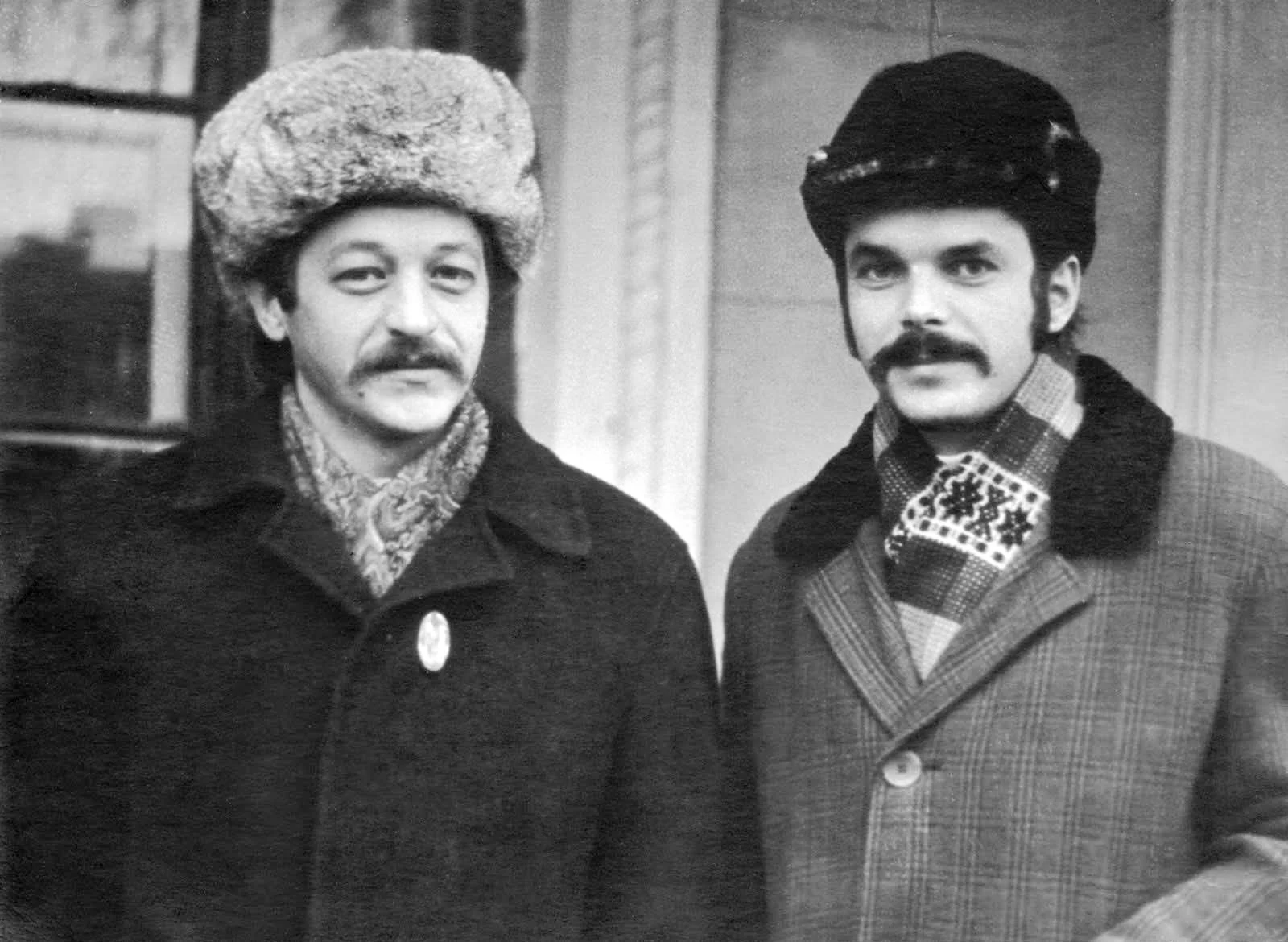
According to Yosyf Zisels, in the mid-1960s, he deliberately sought out representatives of the Ukrainian underground, which few people knew about at the time. He was one of the first to meet Nadia Svetlichna. However, his outlook was especially influenced by Mykhailo Horyn.
“There are no people without fear, there are people who control their fear. This is precisely the social courage associated with the peculiarities of upbringing. And such courage is characteristic of Ukrainian dissidents,” Zisels emphasized.
The human rights defender recalls that due to constant monitoring and eavesdropping, they tried not to meet at home. They often talked in the boiler room, where Mykhailo Horyn worked as a stoker.
“I was very impressed by his love for Ukraine. As with other dissidents – devotion and vast knowledge of history, language, literature. Dissidence was more important to me then than my ethnic origin. But Mykhailo Horyn pushed me to the fact that I should always hold on to my own. You can go further, but your national should be in your background, in your memory and even in your subconscious,” shared Yosyf Zisels.
He also spoke about his acquaintance with Vyacheslav Chornovol, whom he called an extremely educated and intellectually powerful person.
“His energy is a separate aspect of personality that is not given to everyone. He could work a lot and build certain structures around himself. Not every dissident could do that. And Chornovil could,” said the human rights defender.
Yosyf Zisels is one of the most famous Ukrainian human rights defenders, co-head of the Association of Jewish Organizations and Communities (Vaad) of Ukraine, Ukrainian public figure, activist of the Ukrainian Jewish movement, fighter for human rights, dissident of the Soviet era.
As a result of drone attacks in Ukraine, at least 20 media workers were injured
Since the start of the full-scale invasion, at least 20 media workers have been injured by drone attacks. Three journalists were killed, one was seriously injured. The official data of the National Union of Journalists of Ukraine was announced during the meeting of the Temporary Investigative Commission of the Verkhovna Rada on the investigation of Russian crimes against journalists.
Russia has changed the nature of attacks on journalists at the front. Unmanned aerial vehicles have become the main threat to people. At least 35 cases of legal pressure on journalists were also recorded: criminal proceedings, arrests in absentia, wanted notices, illegal sentences and imprisonment in the occupied territories.
Parliamentarians also listened to the testimony of public organizations and media representatives from the frontline and occupied territories. Each report contains information about pressure, persecution, or abduction of journalists in the temporarily occupied territories.
People’s Deputy of Ukraine Mykola Kniazhytskyi emphasized that it is important to ensure proper documentation of all crimes against journalists, and the guilty should be punished.
“We must not just record crimes, but collect evidence so that the guilty are actually punished,” Kniazhytskyi concluded.
From dissidence to the European choice: Marynovych on the role of the Ukrainian Helsinki Group
The Ukrainian Helsinki Group, as an independent initiative, emerged in Ukraine 50 years ago. In conditions of total control and fear. This was the beginning of the struggle of Ukrainians for democratic values and against the Soviet system. In an interview with the Halychyna newspaper, co-founder of the Helsinki Group, human rights activist, dissident, political prisoner Myroslav Marynovych shared his memories of the value and moral choice that faced each member of the UGG.
“The founders of the Group were only two people – writer Mykola Rudenko and general Petro Grigorenko. It was in the conversation between them that the idea appeared that, along with the Moscow Helsinki group, a Ukrainian group should be created in Kyiv. Mykola Danylovych took up this case, bypassing those persons who, in his opinion, might dare to join such a group not authorized by the authorities. My friend Mykola Matusevych and I were invited to join the Group by Oksana Yakivna Meshko, who was already a member at that time. And when we signed the UGG Declaration, we thereby became one of its ten founding members,” recalls Myroslav Marynovych.
According to him, each member of the union automatically faced the threat of persecution by the Soviet authorities and even arrests, everyone understood the risks and everyone made their own choice – “security versus values.” Half a century later, Myroslav Marynovych confirms: “I thank God that I solved this dilemma in favor of values.”
More and more new members joined the union, some announced their membership officially, and some remained on the terms of “informal membership. In total, the UGG had 41 participants. Twelve of them, such as Iryna Senyk, Stefania Shabatura, Vyacheslav Chornovil and Mykhailo Horyn, announced their entry into the Group while they were already in prison.
“Listening to my story about working in the Group, Levko Lukyanenko suddenly asked: “Are you ready to go to prison? Do you understand how this will end? If you are not ready, then it is better to leave now.” I thought for a moment, and then confidently answered: “Yes, I’m ready.” These words came to my mind more than once later, during the investigation or imprisonment, when there was a lack of transfusion. How they disciplined me, who gave me inner strength! That’s what it means to ask the right question at the right time!”, – Marynovych shares his memories. According to him, the activities of the Ukrainian Helsinki Group became an important and initial stage of Ukraine’s movement towards European choice and democracy. As it turned out, then the open struggle for human rights shook the communist government more than any underground activity.
“The Ukrainian Helsinki Group finally approved what other Ukrainian “dissidents” had started, namely: Ukraine’s entry into the European civilization of human rights. Further enshrining the European choice of independent Ukraine in its Constitution only confirmed the foresight of the decision made by the members of the UGG.”
In February 1977, UGG members Mykola Rudenko and Oleksa Tykhoi were arrested, and two months later, Marynovych. He recalls that the main thing for everyone was to stand up and defend the truth, contrary to Soviet lies. At that time, UGG members already had the support of the international community, the diaspora, and disseminated the documents of the Ukrainian group through foreign radio stations “Svoboda”, “Voice of America”, BBC and “German Wave”. Marynovych admits that he does not know whether he would have become a dissident if he had not been motivated by the work of the sixties, in particular the poetry of Mykola Vinganovskyi. For his generation, it was a time to make a difference.
“At one time, in the 90s, I had the illusion that my generation was the last to pay dearly for its freedom. And I had no idea that the generations after us would one day be called generations of war. But I am even more grateful to Ukrainians younger than me, who have picked up the baton of the struggle for Ukraine and are now heroically facing the mighty empire until recently,” Myroslav Marynovych thinks.
He called on modern society to mutual respect and trust: “Respect each other’s dignity, learn to trust each other and do not betray each other at the slightest favorable opportunity. And as Mahatma Gandhi said, “Be the change you want to make!” It will be recalled that Myroslav Marynovych became the first laureate of the Stanisław Vincenz Prize “For humanitarian service and development of regions” in 2018. Awarding of the award takes place annually within the framework of the International Forum Via Carpatia.
The publication about the outstanding Ukrainian Vasyl Mudry was presented in the EU
The publication “Vasyl Mudry. The Art of the Possible: A Democrat in the Era of Dictatorships and Totalitarianism”, in 3 volumes, was presented for the first time at the Via Carpatia International Forum in Lviv. And last week, the trilogy edited by Ola Hnatiuk was presented in Warsaw during a debate on the threat of totalitarianism and the importance of democracy. The event brought together leading Polish and Ukrainian historians, journalists, publicists and politicians.
The three volumes of the publication contain documents, photographs, memories, letters, materials about the outstanding Ukrainian – Vasyl Mudry – one of the key figures of Ukrainian political and public life of the interwar period (1893–1966). He was a deputy and vice-speaker of the Polish Sejm, editor-in-chief of the newspaper “Dilo” and co-founder and chairman of UNDO.
This is the tenth book in the series “Ukraine. Europe: 1921–1939”, published by the publishing house of the Ukrainian Catholic University. The afterword to the edition has 140 pages.
Vasyl Mudryi was an opponent of the “Sovietization” of Galicia and understood the danger of the Soviet regime for Ukrainians. It is significant that the NKVD started two forms on Vasyl Mudry at once – in the 1930s and after the war: they were also found in the archives.
“Only democracy can preserve peace for us. And Vasyl Mudryi wrote about this in the last century. But unfortunately, he was not heard then either in Poland or in Ukraine. That is why this book has such a pessimistic title – “The Art of the Possible”, – People’s Deputy of Ukraine Mykola Kniazhytskyi emphasized in his speech during the presentation.
The guests of the event were also well-known figures: Polish journalist and dissident – Adam Michnik, researcher in the field of Ukrainian studies, translator Ola Hnatiuk, member of the Supervisory Board of the NGO All-Ukrainian Democratic Forum Larysa Kniazhytska, public figure, journalist of Ukrainian origin – Myroslav Cheh.