“We must remember and lay everyone to rest,” say Via Carpatia speakers discussing Polish-Ukrainian exhumations
Our past was not perfect, but it should be a good lesson. If we are not together, we will lose
People’s deputy Mykola Kniazhytskyi said this during a discussion panel at the Via Carpatia 2025 Forum.
“Our relations should develop based on our maturity and those threats that we see now, but were not aware of before,” the politician said.
“The process of exhumation (the bodies of Polish citizens on the territory of Ukraine and the bodies of Ukrainians on the territory of Poland, – ed) is Christian. We must remember and bury everyone, regardless of what the policy was and what were the reasons for their death, – emphasized Kniazhytskyi. – Such a Christian approach unites us and places on us the great responsibility of choosing between good and evil.”
The deputy of the Polish Seimas Pawel Kowal also touched on the topic of exhumation: its suspension on Ukrainian territory created tension in relations between the countries, which was also fueled by Russian propaganda.
“It is clear that solving this problem will be a challenge for Russia, and we managed to make progress on this path. Exhumations are already being carried out in two places, the next ones are planned… This is an important humanitarian format: tensions have decreased significantly. It is not yet a success, but we are close to it,” the Polish politician noted.
According to Mykola Kniazhytskyi, our past was not perfect, but it should be a good lesson: we win when we move together, based on common values.
“And if today someone says, ‘Poles are again opposing Ukrainians,’ I am sure that the majority of the Polish political class will not allow this. The Polish government is more clearly aware than ever how important Ukrainian-Polish cooperation is for common security,” Kniazhytskyi summarized.
The eighth Via Carpatia Forum took place on November 28 in Lviv.
The big threat now is Russian disinformation. It is aimed at undermining trust and discord between Ukrainians and Poles, said Olena Kondratyuk, Deputy Speaker of the Verkhovna Rada, at the Via Carpatia 2025 Forum.
“Poland was, is and will be our strategic partner; Russians want to turn us against each other,” says Olena Kondratiuk at the Via Carpatia 2025 forum
The biggest threat now is Russian disinformation. It is aimed at undermining trust and discord between Ukrainians and Poles
Olena Kondratyuk, Deputy Speaker of the Verkhovna Rada of Ukraine of the 9th convocation, said this during the discussion “Integration of Ukraine into the EU. The role and place of Ukrainian-Polish relations in this process” within the Via Carpatia 2025 Forum.
She recalled Poland’s position during the full-scale invasion and thanked on behalf of the Ukrainian parliament and people. “The total aid amounts to 5 billion euros, of which 3.5 billion is military aid. These are colossal resources that allowed Ukraine to stand up and hold the front in the most difficult moments. In addition, Poland has become a real military hub, in fact the gate through which international aid arrives, and this is critically important for our defense,” she said.
Olena Kondratiuk also cited data from sociological studies on the attitude of Poles to Ukraine’s accession to the EU: 70% of Poles support the expansion of the European Union, more than 52% support the accession of Ukraine and Moldova. “The key thing is to preserve and strengthen the positive dynamics. Polish society sees in the expansion of the EU not only a valuable, but also a security and economic dimension,” the speaker noted.
Among the greatest threat to relations between the states, she named Russian disinformation aimed at undermining trust and discord between Ukrainians and Poles: at the beginning of November, there was an important statement by the Polish General Staff, which clearly indicated that the Russian Federation will use disinformation to the maximum, including against Ukrainians, to undermine security in Poland.
“We must monitor these processes very carefully, because anti-Ukrainian sentiments in Poland also mean anti-European sentiments, which contradicts the interests of both states,” Kondratiuk commented.
“Today, it is extremely important to maintain and strengthen contacts at all levels – between parliaments, governments, institutions. The Ukrainian-Polish Assembly, groups of interparliamentary friendship and joint meetings allow us to have a clear plan of action and talk even about difficult issues, in particular about historical memory. Thanks to our resolution, this dialogue has been restored: a working group has been created, exhumation and search work has begun, and this is an extremely important process of reconciliation and mutual respect. We must do everything so that historical topics do not divide our peoples and do not become a tool of political manipulation,” the vice-speaker summed up.
The eighth Via Carpatia Forum took place on November 28 in Lviv.
The Via Carpatia Forum was launched in 2018. It was held every year in Verkhovyna, Kryvorivna, Lviv, Ivano-Frankivsk or Kyiv. The initiator and founder is People’s Deputy Mykola Kniazhytskyi.
Organizers of Via Carpatia 2025 – Public organization “All-Ukrainian Democratic Forum”, Ukrainian Catholic University.
Ukraine in the European context: the eighth Via Carpatia Forum took place in Lviv
On November 28, the Via Carpatia Forum took place in Lviv. The event, which annually unites Ukrainian and European intellectuals, scientists, public and political figures, volunteers, artists, educators, is being held for the eighth time.
“We are holding a forum at one of the most difficult times for our present and future… Russia started and continues a war against Ukraine in order to rewrite history to restore its empire. Moscow’s goal is to erase the consequences of the collapse of the USSR and return Europe to the 1930s, when the world was ruled by force, including totalitarian regimes. Today we will discuss how to prevent this, we will talk about our democratic traditions… Our goal is for Ukraine to become a full member of the EU, despite all attempts to prevent it,” Mykola Kniazhytskyi, chairman of the subcommittee on cultural policy of the Verkhovna Rada Committee on Humanitarian and Information Policy of the Verkhovna Rada of Ukraine, People’s Deputy of Ukraine, initiator of the Forum, said during the opening.
Pavel Koval, the head of the commission on international affairs of the Sejm of the Republic of Poland, in his speech at the opening of the forum, emphasized that it is in Poland’s interests to expand the EU to the East to the Western Balkans. “There are various reasons for this – both strategic and security. We must demonstrate the political will to build a common Europe so that Ukraine enters the EU as soon as possible. And we must not assume that Russia blocks the expansion of the EU and NATO.”
He also recalled the words of Jerzy Gedroyc in the context of the prospects of Polish-Ukrainian relations, that “Europe will be united, one organism, with a common market, and old conflicts and competition will not matter.” “And I think we are close to this,” the Polish politician noted.
“Ukraine is doing a great thing, creating a legend: Ukrainians at the front know what they are there for: because they love the Motherland and are sure that it is part of Europe. And no one in Ukraine will take that away,” Pavel Koval summed up.
Taras Dobko, rector of the Ukrainian Catholic University, expressed concern about the fate of Central and Eastern Europe and the joint dialogue due to the actions of Hungary and Slovakia.
“For years, the history of Ukraine’s membership in Europe has served as an alternative to Russian influence, a basis for our integration into the wider European space,” he noted. As for Polish-European relations, he noted that “if our relations are friendly, imperial Russia has no chance.”
This year’s forum begins with the presentation of the unique trilogy “The Art of the Possible: A Democrat in the Era of Dictatorships and Totalitarianism” edited by professor and historian Ola Hnatiuk.
The publication describes the era of the interwar period of the 20th century through the biographical history of the prominent Ukrainian Vasyl Mudry, deputy and vice-speaker of the Polish Diet in the 1930s, editor-in-chief of the Dilo newspaper.
In the panel discussion “Integration of Ukraine into the EU. The role and place of Ukrainian-Polish relations in this process” will be attended by Olena Kondratyuk, Deputy Speaker of the Verkhovna Rada of Ukraine of the 9th convocation; Mykola Kniazhytskyi, Chairman of the Subcommittee on Cultural Policy of the VRU Committee on Humanitarian and Information Policy, initiator of the Forum; Pavel Koval, Chairman of the International Affairs Commission of the Sejm of the Republic of Poland, authorized by the Polish Government on the restoration of Ukraine.
Traditionally, at the Via Carpatia Forum, the laureate of this year’s Stanisław Vincenz Prize “For Humanistic Service and a Contribution to Regional Development” was announced.
In previous years, the laureates of the Stanisław Vincenz Prize were: Myroslav Marynovych, Ivan Malkovych, Leonid Finberg, Petro Rykhlo, Yuliia Paievska “Taira”, Yosyf Zisels and Rostyslav Derzhypilskyi.
The Via Carpatia Forum was launched in 2018. It takes place every year – in Verkhovyna, Kryvorivna, Lviv, Ivano-Frankivsk or Kyiv. The initiator and founder is People’s Deputy Mykola Kniazhytskyi.
Organizers of Via Carpatia 2025 – Public organization “All-Ukrainian Democratic Forum”, Ukrainian Catholic University.
Integration of Ukraine into the EU. The role and place of Ukrainian-Polish relations in this process – a panel discussion at the Via Carpatia 2025 forum
The discussion on the role and place of Ukrainian-Polish relations in the process of Ukraine’s integration into the EU will take place within the eighth International Forum of Central and Eastern Europe Via Carpatia 2025
Moderator Fr. Bohdan Prah. The following will take part:
Olena Kondratyuk, Deputy Speaker of the Verkhovna Rada of Ukraine of the 9th convocation;
Mykola Kniazhytskyi, chairman of the subcommittee on cultural policy of the Committee of the Verkhovna Rada of Ukraine on Humanitarian and Information Policy, People’s Deputy of Ukraine, initiator of the Forum;
Pavel Koval – Chairman of the Committee on International Affairs of the Sejm of the Republic of Poland (TVS)
Pavel Cliz – head of the justice and human rights commission of the Sejm of the Republic of Poland (TVS)
Memory that heals is the basis of European identity, partnership is a factor of Europe’s stability, democracy is the answer to modern authoritarian threats. The purpose of the Forum is to unite intellectuals and society around the development of a free future in Central and Eastern Europe.
“Via Carpatia 2025” will begin at 1:15 p.m. with the presentation of the trilogy about the outstanding Ukrainian Vasyl Mudry “The Art of the Possible: A Democrat in the Era of Dictatorships and Totalitarianism”. Scientific editor Ola Hnatiuk. UKU Publishing House, 2025.
The Forum will end with the awarding of this year’s winner of the Stanisław Vincenz Prize “For Humanistic Service and Development of Regions”.
More information on the Forum website: https://www.viacarpatia.org/
The venue and detailed program of the event will be notified to the registered participants.
Form for registration of visitors here
Media registration form here
The Via Carpatia 2025 International Forum will start with the presentation of a unique publication
The opening and first event of this year’s International Forum of Central and Eastern Europe “Via Carpatia 2025” will be the presentation of a unique documentary trilogy: “The Art of the Possible: A Democrat in the Era of Dictatorships and Totalitarianism.” A large-scale publication dedicated to the figure of the outstanding Ukrainian Vasyl Mudry.
Vasyl Mudryi (1893–1966) is one of the key figures of Ukrainian political and public life of the interwar period, deputy and vice-speaker of the Polish Diet. He is known as the editor-in-chief of the newspaper “Dilo” and co-founder and chairman of UNDO.
The trilogy reveals his legacy in three areas of public activity – journalistic, political and public. The publication logically combines hundreds of journalistic materials, program documents, speeches, memories, photos and research comments.
This is the tenth book of the series “Ukraine. Europe: 1921–1939”, prepared under the scientific editorship of Ola Hnatiuk and published by the UCU publishing house.
The book is addressed to historians, researchers of the interwar period, and anyone interested in Ukrainian intellectual history of the 20th century.
Discover the character of Vasyl Mudryi and his ideas – come to the eighth Via Carpatia forum!
November 28, Lviv.
We will inform the registered participants about the location
Form for registration of visitors
here.
Media registration form
hereVia Carpatia International Forum returns to Ukraine for the eighth time!
On November 28, Lviv will become the center of an intellectual European discussion within the International Forum of Central and Eastern Europe Via Carpatia 2025. The eighth Via Carpatia Forum will once again unite Ukrainian and European intellectuals, scientists, public, political figures, volunteers, artists, educators, to testify that Ukrainian culture is an inseparable part of the European space.
Special events of the Forum will be:
Presentation of the edition “Vasyl Mudryi. The art of the possible: a democrat in the era of dictatorships and totalitarianism: in 3 books. Scientific editor Ola Hnatiuk. UKU Publishing House, 2025.
Panel discussion “Integration of Ukraine into the EU. The role and place of Ukrainian-Polish relations in this process”.
The international forum will end with the awarding ceremony of the annual Stanisław Vincenz Prize for humanitarian service.
Via Carpatia was launched in 2018. The forums took place in Verkhovyna, Kryvorivna, Lviv, Ivano-Frankivsk, and last year’s forum was held in Kyiv. The initiator of the Forum is the founder of the NGO “All-Ukrainian Democratic Forum”, People’s Deputy Mykola Kniazhytskyi.
Memory that heals is the basis of European identity, partnership is a factor of Europe’s stability, democracy is the answer to modern authoritarian threats. The purpose of the Forum is to unite intellectuals and society around the development of a free future in Central and Eastern Europe.
The forum certifies that Ukrainian culture and democratic tradition are an inseparable part of the European space. Rethinking the ideas of Vasyl Mudry, discussions about Ukrainian-Polish cooperation and Ukraine’s path to the EU form a vector of joint resistance to threats in the modern world. The Stanisław Vincenz Prize affirms the value of humanitarian service and regional development.
To participate in the Forum, please register.
We will inform accredited participants and media representatives of the location and program by letter.
Form for media accreditation.
Registration form for forum participants.
More information on the Forum website viacarpatia.org
Organizers of the eighth International Forum of Central and Eastern Europe “Via Carpatia 2025”: Public organization “All-Ukrainian Democratic Forum”, Ukrainian Catholic University
Information partners:
Espreso TV channel
Radio FM Halychyna
“On the High Uplands”: How Stanisław Vincenz changed the world’s perception of the Hutsul region
November 30 marks the 137th anniversary of the birth of Stanisław Vincenz. The Polish writer, philosopher, essayist and cultural expert was born in 1888 in the Carpathian region. The village of Kryvorivnia shaped his perception of the world and provided support for creativity. With his research, memories, works, he forever inscribed the Hutsul region on the map of European culture.
The future chronicler of the Hutsul region spent his childhood among the mountains in his mother’s village of Kryvorivna. A boy from a noble family was looked after by a hutsulka, he listened carefully to her songs, stories of shepherds, memorized proverbs, sayings. Stanislav observed how people live “at height”, in harmony with nature, not subduing it, but adapting to its rhythm. It was this world that he later recreated in his epic – “On a high plateau”. The four volumes of the work cover decades of Hutsul life.
The author wrote: “It was a life that did not adapt neither the mountains nor the forests of Poland to itself, but only adapted to them intelligently.”
Stanislav studied at gymnasiums in Kolomyia and Stryi. Subsequently, he studied law, biology, psychology, philosophy, Sanskrit at the universities of Lviv and Vienna, and knew 14 languages. He began to write the main work of his life – the edition about the Hutsul Region “On the High Uplands” in 1930.
Stanisław Vincenz spent most of his life in exile – in Hungary, France, Switzerland. But even far from the Carpathians, he continued to write about them. So each volume ended in different countries in different years:
“Truth of the Ancient”, Warsaw, 1936
“New times. Zvada”, London, 1970
“New Times. Letters from Heaven”, London, 1974
Periwinkle Wreath, London, 1979
The trilogy became a real encyclopedia of Hutsul life, a cultural evidence that combines: songs, customs, legends, prayers, parables. Stanisław Vincenz’s books are an attempt to find and preserve the moral and spiritual code of the people. Valuable information for history, folklore could have disappeared without a trace if he had not recorded everything professionally for the future.
Thanks to Stanisław Vincenz, Hutsulshchyna became known to Europe.
She was talked about in Warsaw, Paris, Vienna. Already after the appearance of the first volume, European readers learned that Hutsulshchyna is not a remote region, but a place of unique culture in which people live in harmony with nature.
Ukrainians, Poles, and Jews lived nearby in the mountains. And Vincenz saw this peaceful coexistence, mutual tolerance from an early age. This experience became the basis of his humanistic worldview. In difficult times, during the Second World War, the writer saved Jews, hid people from persecution. For this later, Israel awarded him the honorary title “Righteous Among the Nations of the World”.
Stanisław Vincenz’s books became an intellectual and spiritual connection between Polish and Ukrainian cultures, between past and present, memory and future.
To honor the memory of the leading scientist and writer Stanisław Vincenz, in 2018, the award for “Humanistic service and contribution to the development of regions” was established in Ukraine.
The Stanisław Vincenz Prize is awarded annually during the International Forum of Eastern and Central Europe “Via Carpatia”.
Myroslav Marynovych, a founding member of the Ukrainian Helsinki Group, organizer of the amnesty movement in Ukraine, vice-rector of the Ukrainian Catholic University in Lviv, became the first laureate of the Ukrainian Stanisław Vincenz Prize.
Honors were also awarded to:
2019 – Ivan Malkovych, poet and publisher
2020 – Leonid Finberg, cultural researcher, director of the Center for Research in the History and Culture of Eastern European Jewry, editor-in-chief of the “Spirit and Litera” publishing house
2021 – Petro Rykhlo, literary critic, essayist, translator and member of the Ukrainian PEN
2022 – Yuliia Paievska “Taira”
2023 – Yosyf Zisels, public figure and dissident of Jewish origin
2024 – Rostyslav Derzhypilskyi, director, actor, People’s Artist of Ukraine, general director — artistic director of the Ivano-Frankivsk National Drama Theater.
In 2025, the International Forum of Central and Eastern Europe “Via Carpatia” will be held at the end of November. The name of the laureate of the year will be officially announced after the decision of the award chapter.
Diplomacy unites: an international forum marked the 95th anniversary of the diplomatic school of LNU in Lviv
The support of the state through diplomatic efforts at all possible levels was discussed during the discussions of the First Lviv Forum of Diplomacy.
International meetings were organized on the occasion of the 95th anniversary of the Diplomatic School of Ivan Franko Lviv National University. Among the graduates of the university are many famous diplomats, deputies, scientists, and statesmen. Graduates and students of the Faculty of International Relations gathered at the anniversary meeting, as well as guests – diplomats from the Republic of Poland, ambassadors of Ukraine from the Czech Republic, Bosnia and Herzegovina, Kenya joined online.
The founder of the Public Organization “All-Ukrainian Democratic Forum”, People’s Deputy Mykola Kniazhytskyi also studied at the Faculty of International Law and Business of the Lviv National University named after Ivan Franko. In the Verkhovna Rada of Ukraine, Kniazhytskyi is the co-chairman of the parliamentary group on inter-parliamentary relations with the Republic of Poland, a member of the groups on inter-parliamentary relations with France and Lithuania. In his speech at the forum, he particularly emphasized that the synergy of parliamentary and diplomatic activities is extremely important at the present time.
“Parliamentary diplomacy is communication between societies. Parliamentarians in all states are closest to the people and in constant contact with them. The main role of such diplomacy is to convince colleagues from different parliaments to convey information about Ukraine to people in their countries,” explained Kniazhytskyi.
According to him, our state should take care of Ukrainians who temporarily went abroad because of the war, protect them.
“We are grateful to Polish society for accepting Ukrainian refugees. But we can’t help but worry about the anti-Ukrainian slogans that come from far-right politicians to harm our relations. Therefore, it is necessary to work a lot diplomatically together with Polish politicians, as well as with Czech politicians and so on in each country. It is necessary to involve cultural and public organizations, the diaspora, because they are our ambassadors there. We have to make sure that Ukraine is supported and that we jointly defeat our common enemy,” concluded Mykola Kniazhytskyi.
People’s deputies Galina Vasylchenko, Sofia Fedina, and Rostyslav Tistyk, who were present at the event, also talked about their activities in interparliamentary groups, which intensified international work after the full-scale invasion. These are official delegations, speeches of Ukrainian deputies abroad, and most importantly – a unified position on defending the interests of Ukraine, regardless of factions and political parties.
“Encourage the international community to take the necessary decisions for the protection of Ukraine earlier,” Deputy Foreign Minister Oleksandr Mishchenko urged the diplomats.
“Arming the army, helping the population – this is the task of diplomacy of the present time. To ignite in partners the feeling that our common goal is to defend democratic values. We are all working together for victory,” said the deputy minister.
As a result of the forum, the Lviv Declaration of Basic Principles of Modern Diplomacy was signed.
As emphasized by the dean of the Faculty of International Relations of Lviv National University named after Ivan Franko Markiyan Malskyi – at the Diplomacy Forum, a joint document was declared as a guideline for future cooperation. And the principles specified in the declaration are fundamental for the new world order, for peace, justice, and security in the world.
The forum was held for the first time, but in the future it will be periodically held at the university.
EdTech experience: digital tools change the student, teacher, school, state
Educational technologies are not only modern online platforms, programs or tools that make learning more interesting and accessible to everyone. This is also a profound change in traditional teaching methods: from the transition to digital textbooks and online courses to the use of interactive videos, mobile applications and classroom management systems.
World universities are now very active in innovation. Oxford became the first educational institution in the UK to open access to the specialized educational version of ChatGPT Edu for students and teachers. The specialized program was tested for a year with several hundred participants. Harvard and Stanford are investing millions in education-changing startups and launching their own incubators for students to create innovative products.
Digital transformation of education is also possible at the level of state policy. A vivid example is Taiwan, one of the leading countries in the field of digital education. Here they plan to create a full chain e-education – from elementary school to lifelong learning. Taiwan’s Ministry of Education has launched a large-scale “Digital Learning Enhancement Plan” for students in grades 1-12. According to this plan, every student receives a tablet, and schools receive stable Internet. Among the goals: distribution of mobile devices among students, reduction of printed textbooks, lightening of the weight of school bags. The program for 2022-2025 provided for funding in the amount of 672 million dollars. and the involvement of education solution providers from the US. And, as studies have already shown, the use of digital platforms significantly increases the quality of education.
By 2030, the Ministry of Education of Taiwan has set an ambitious goal – that all schoolchildren will be equally proficient in English and Mandarin through digital tools. In addition, the government is encouraging projects in the form of public-private partnerships to create digital content, developing an alliance of universities to conduct artificial intelligence courses for schoolchildren. Generative AI has already been integrated into the “Taiwan Adaptive Learning Platform” (TALP), which will become available to all teachers and students.
“Having learned about the educational approaches of Taiwan, it was important for us to at least partially transfer this experience to Ukraine. That is why we offered our Taiwanese partners to support Ukrainian school education,” said the head of the board of the NGO “All-Ukrainian Democratic Forum” Iryna Handzyuk. This is how the idea of the “Leave no one behind partnership” educational charity project, implemented by a public organization during 2024-2025, arose.
According to Iryna Handzyuk, the combination of the principle “every student has a tablet” with integrated cloud platforms and artificial intelligence turned out to be a successful element of the modernization of Taiwanese education. In addition, the synergy between the state, the private sector, and Taiwan’s educational institutions has made it possible to create effective forms of education that meet the challenges of the digital age.
“We also appealed to the best Ukrainian teachers in the field of IT to improve the qualifications of school informatics teachers. It was at UCU that the first, absolutely unique program for teachers “Code&Create” was formed. After a year, we already have 33 teachers – finalists of innovative education.
The program lived up to expectations and we want to continue it. In addition, we handed over 1,248 laptops to schools. It’s not yet about “a tablet for every student”, but we managed to equip 96 computer science rooms in schools in the Lviv, Ivano-Frankivsk and Poltava regions during the year. And today it is a significant help to our state and education”, – explains Iryna Gadziuk.
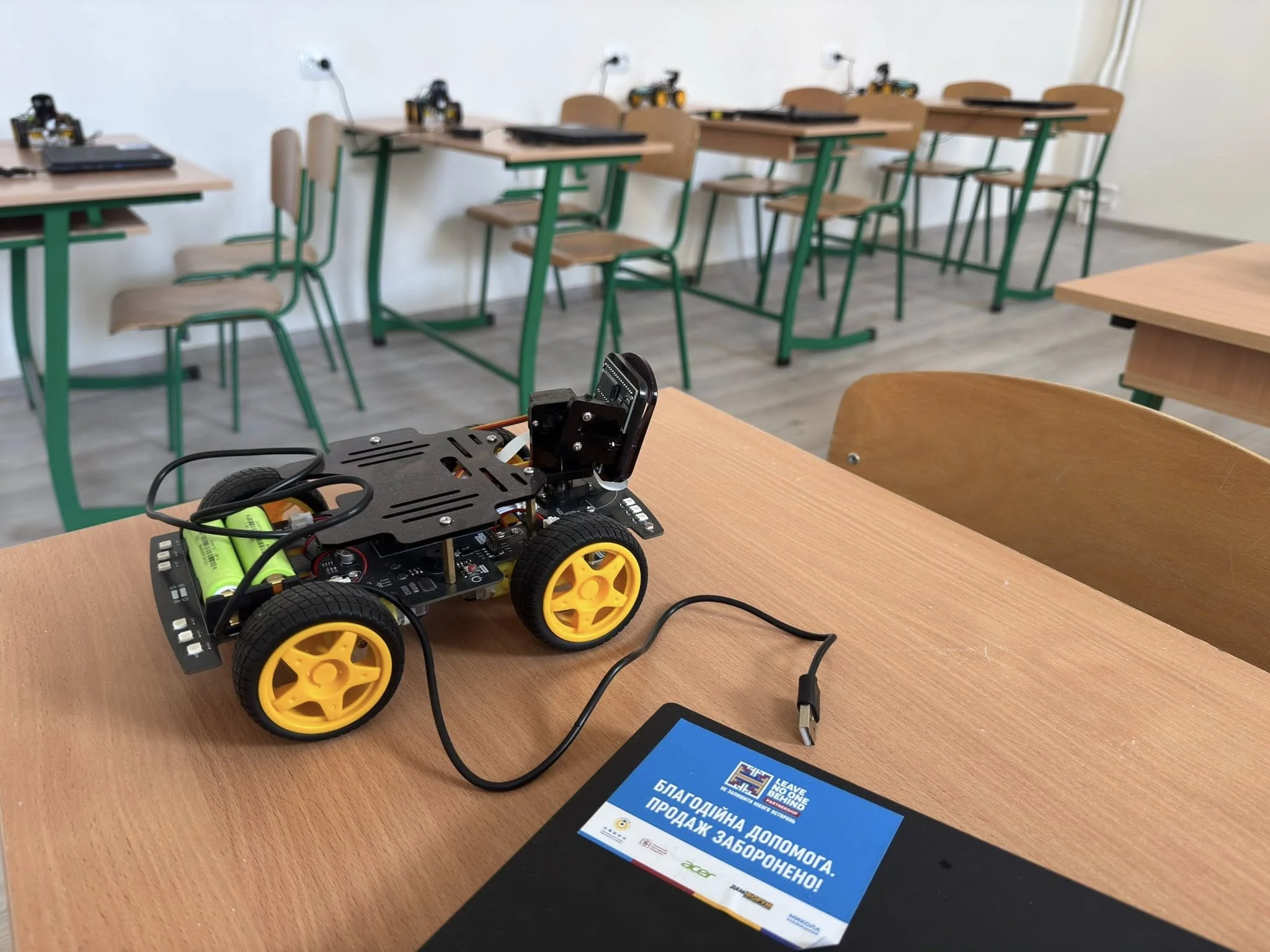
As part of the “Leave No One Behind Partnership” project, high school students learned to think innovatively and generate business ideas. Classes were held in schools, under the mentorship of UCU teachers and students. This is again experience borrowed from international partners.
Thus, during the pandemic, in Taiwan, the project “Digital Learning Companion” was implemented, within the framework of which university students tutored school students online. This helped to improve learning of the material, provided social support and developed new responsibility and communication skills in schoolchildren and students.
“Taiwan’s experience and capabilities have already helped 96 Ukrainian schools. But we hope to continue cooperation to reach even more children and teachers. Ukrainian education needs modern tools and approaches, and such partnerships prove: even in the most difficult conditions, we can move forward, open up new opportunities for students and make our country competitive in the world,” said the initiator of the “Leave no one behind Partnership” project, Mykola Kniazhytskyi.
Educational technologies are becoming an integral part of Ukrainian schools and opening up new opportunities for children and teachers.
Ukrainian-Polish dialogue at Via Carpatia 2024: A year on, its key points are even more relevant
Last year, in November, the NGO “All-Ukrainian Democratic Forum” organized a large-scale international forum “Via Carpatia-2024” in Kyiv. In the format of the “Ukrainian-Polish meeting”, the event brought together politicians, diplomats, and experts from both countries. The participants discussed possible joint solutions in the spheres of security, defense, economy, and culture. Theses expressed at the forum, a year later, now sound like strategically urgent.
“Our common priority is the defense of Europe,” emphasized Vasyl Bodnar, Ambassador Extraordinary and Plenipotentiary of Ukraine to Poland. The deputy of the Sejm of the Republic of Poland, Marcin Bosatsky, emphasized the common interests of Ukraine and Poland: “If Ukraine is free, self-sufficient, as part of the EU and NATO, then Poland will be safer and more developed.”
The initiators of the meeting last year were the co-chairs of the inter-parliamentary groups – deputies of the Verkhovna Rada of Ukraine Mykola Kniazhytskyi and Artem Kovalev, as well as the head of the Polish-Ukrainian parliamentary group Marcin Bosatskyi.
A notable event of the forum was the presentation of the initiative of the Defense Information Consortium aimed at forming an expert environment for defense needs. It was supported by the “All-Ukrainian Democratic Forum” and the “Espreso” TV channel.
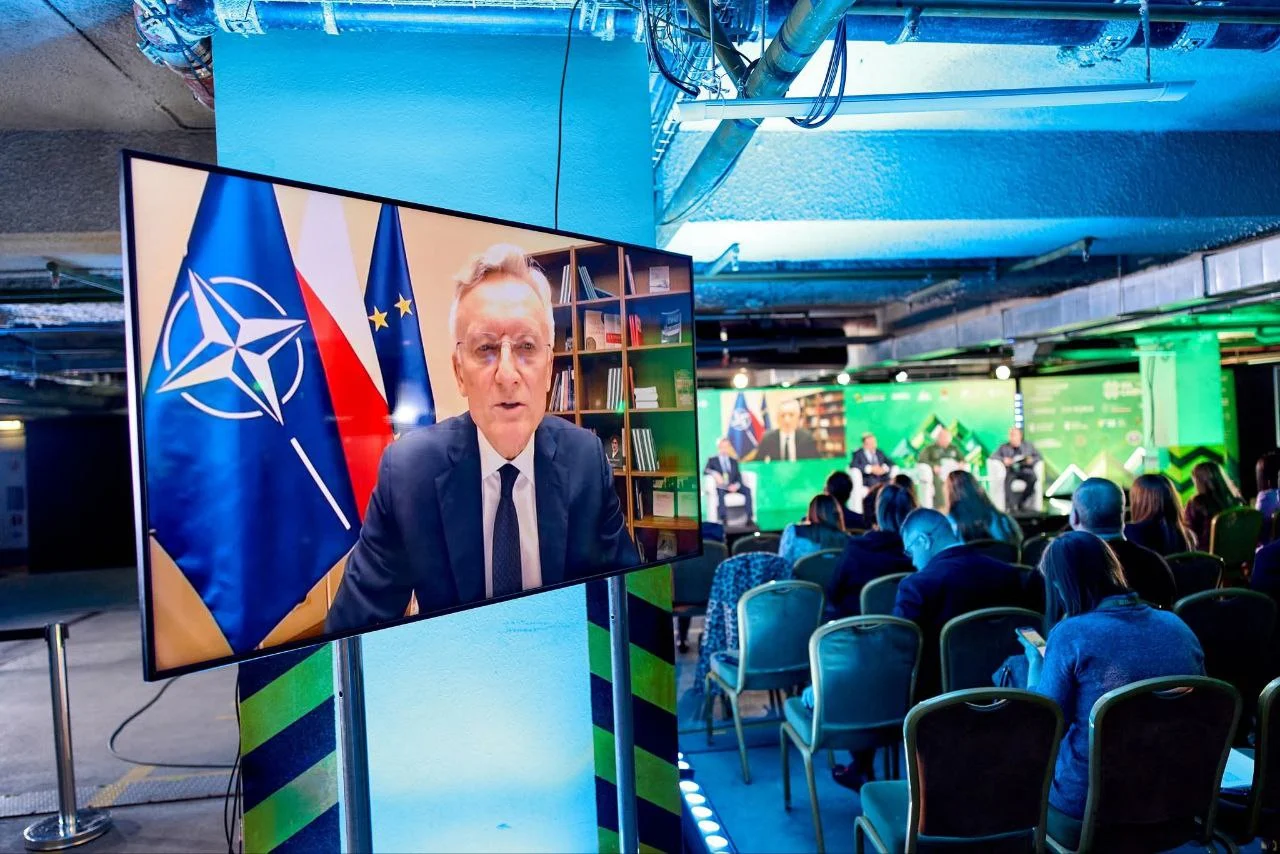
“Our task was to create an extremely strong pool of experts that would work for the needs of Ukrainian defense and the Ukrainian state,” Mykola Kniazhytskyi, the founder of the All-Ukrainian Democratic Forum NGO, explained the idea of the consortium.
“The old stories that once divided us should be left to historians today and removed from the agenda,” TVP World Director and Editor-in-Chief Michal Bronyatovsky urged the societies of both countries.
Today, when Russia continues its cynical military aggression, drone attacks are already affecting the territory of Poland – the theses of the forum are gaining even more weight.
“Poland supports Ukraine logistically, materially, with ammunition. The total value of military aid provided by a neighboring state since the start of a full-scale invasion has reached an estimated €4.5 billion as of 2024. Defense companies of both countries integrate new technologies, coordinate production processes and joint defense actions. It is thanks to such cooperation that Ukraine and Poland become stronger. The task of the annual international meetings at the forum is to create space for new topics and directions of interaction that will deepen the partnership”, – emphasizes the head of the board of the NGO “All-Ukrainian Democratic Forum Iryna Handzyuk”.
The events of this week only confirmed that the security issues of Poland, Ukraine and the whole of Eastern Europe are inextricably linked. That is why the experience and agreements developed within the framework of “Via Carpatia 2024” are used to organize and hold the next important meetings and cooperation between the leaders of both states.
Forum “Via Carpatia” – 2024 took place in Kyiv last November, about a hundred mass media were accredited to the event, Ukrainian and foreign journalists worked with us. The video broadcast of the forum panels took place on TV channels “Espreso” and “TVP World”.
We will inform you about the following events resources organizations