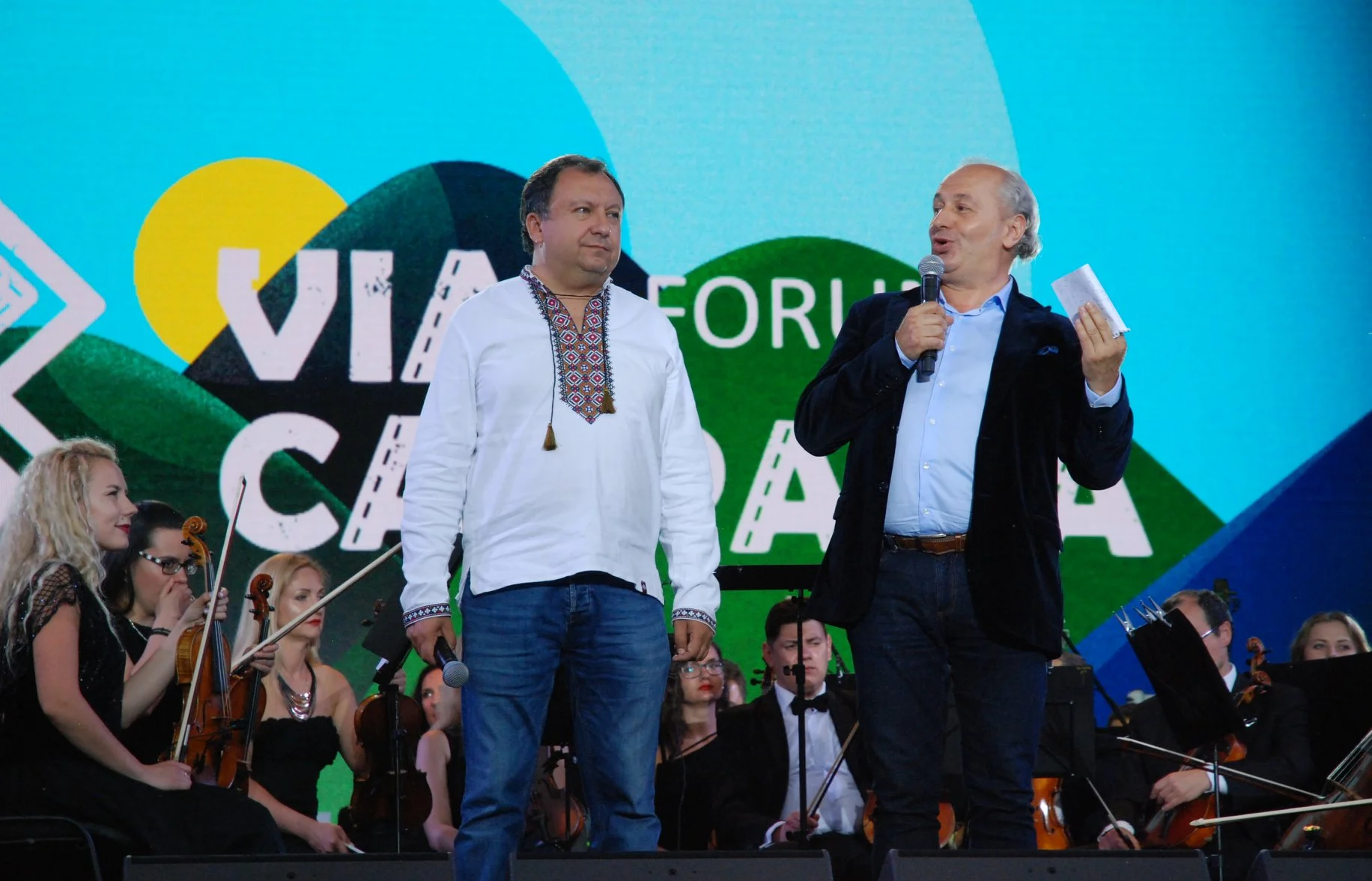
On February 8-9, 2023, the first international forum took place in Kyiv: “War in Ukraine. Battle for culture”. It became a large-scale informal platform for the communication of fighters of the cultural front. Over the course of two days, more than one and a half hundred participants from Ukraine and abroad discussed the challenges in the task of preserving cultural heritage today and responding to them, summed up the difficult war year that has passed.
He acted as a partner of the Forum All-Ukrainian Democratic Forum.
The result of the discussions, which were attended by about 200 specialists from Ukraine and abroad, initiated by the Heritage Rescue Headquarters and the Maidan Museum with a number of Forum partners, was the creation of Resolutions following the results of the International Forum on the Security of Cultural Heritage “War in Ukraine: Battle for Culture” February 8-9, 2023. The purpose of this document was formulated by the participants of the forum – it was a step towards the formation of a road map for the preservation, rescue, stabilization, restoration and development of the cultural sphere of Ukraine.
We share with you the text of the Resolution
RESOLUTION
according to the results of the International Forum on the Security of Cultural Heritage “War in Ukraine: Battle for Culture”
February 8-9, 2023
February 24, 2022 became a turning point not only for Ukraine, but also for the world. Despite all the motives invented and voiced by Russian propaganda, it is obvious that the main reason for the war is Russia’s intention to destroy Ukraine as a sovereign state, and Ukrainians as an independent and free nation.
With this in mind, Ukraine’s culture, especially its cultural heritage, is a separate target for the Putin regime and will remain under attack until it capitulates and ceases its hybrid aggression, both armed and propaganda.
Despite its potential vulnerability in times of crisis, the culture has not become defenseless, has demonstrated its resilience and ultimately its ability to shape its own agenda. Cultural workers, volunteers, soldiers, local communities, thousands of caring people show their civic responsibility, and in many cases, real heroism in protecting the culture and cultural heritage of Ukraine.
At the same time, the solidarity of the whole world, international assistance in saving and preserving the culture of Ukraine during the war is unprecedented in intensity and scale.
In responding to the actions of the aggressor’s army, Ukraine is guided by world experience laid down in the norms of international law, namely the Hague Convention on the Protection of Cultural Property in the Event of Armed Conflict of 1954, the First and Second Protocols to it.
The realities of a full-scale war testify to the ineffectiveness of those provisions of the Hague Convention, which refer to the obligation of the contracting parties to refrain from any hostile acts in relation to cultural values, looting, theft, their illegal appropriation, acts of vandalism in relation to them, etc. However, it is precisely these legal norms that make it possible to classify such actions of Russians as crimes, accordingly, this imposes an obligation on both Ukraine and the international community to make efforts to investigate each such recorded crime and bear responsibility for it.
This Resolution is the result of discussions in which about 200 specialists from Ukraine and abroad participated within the framework of the Heritage Rescue Headquarters and the Maidan Museum with a number of Forum partners.
The purpose of this document is not only to give a final analysis of the problems, challenges and work done, but also to become a step towards the formation of a road map for the preservation, rescue, stabilization, restoration and development of the cultural sphere of Ukraine.
Today, Ukraine is becoming a kind of testing ground for calibration, revision, testing and adaptation of international principles and methodologies for responding to challenges facing cultural heritage in territories where large-scale and active military operations are being conducted. We are obliged to use the acquired experience, both positive and that which includes mistakes and losses, to update and develop the system for responding to threats and the loss of cultural values.
Especially important is the experience of solidarity and partnership both within the national cultural community and at the international level. The most important lesson of this experience is that algorithms, instructions and action plans are very necessary, but they will never anticipate all possible challenges and situations. So, in the end, everything depends on people – motivated, professional, ready to make operational decisions, participate in their implementation and be responsible for it, people who, at the level of their own competences and capabilities, consider it their duty to respond to other people’s troubles and problems.
Also, an obvious conclusion is that the activities for preservation and protection of cultural heritage should be controlled and coordinated by the state. However, this control and coordination will never be effective without proper and maximally open communication with all subjects of the process – managers and employees of cultural institutions, members of professional public organizations, volunteers, representatives of local self-government bodies, central, military and law enforcement authorities. This communication cannot be fragmented and one-sided, but must work as an effective system that ensures communication at all levels and contributes to the adoption of the most effective operational decisions.
Forum participants agreed on the urgent need for the formation of a national doctrine for the protection of cultural heritage – a strategic document that takes into account Ukrainian and global experience in responding to emergency situations, the dynamics of technological progress, the opportunities and challenges of globalization and glocalization, the existing world system for the protection and preservation of cultural heritage in crisis conditions.
The doctrine should include the following stages:
● functioning in non-crisis conditions and preparation for a crisis;
● crisis response;
● stabilization and recovery.
The key principle of the doctrine: the preservation, transmission, promotion and development of cultural heritage is a matter of national security on a par with territorial integrity, preservation of the independence of Ukraine, its democratic and legal system, humanitarian and environmental security. Moreover, it is the cultural “firmware” of the nation that forms society’s understanding of the importance of all these values and the ability to protect them. The cultural heritage created and handed over to us, the saved and revived historical memory made possible the existence of Ukraine in the past and in the present, and became the basis for the development of Ukraine in the future.
The thematic priorities of the doctrine constitute four groups, according to which a list of components, tasks and principles is proposed, which are fundamental, but not exhaustive.
I. Objects of cultural heritage: architectural, historical and archaeological monuments; museum collections, archives and libraries; museum objects and works of art, etc.; knowledge and traditions, historical memory, oral folk art, crafts, national cuisine, art centers and schools, etc.:
● unified storage and accounting system;
● the evacuation algorithm of movable objects of cultural heritage, the formation of strategic stocks of the necessary materials and equipment for evacuation and the network of equipped storage facilities;
● digitization of 100% of units of the Museum Fund of Ukraine, the National Archive Fund, immovable monuments (primarily accounting documentation);
● centralized accumulation and preservation of digitized data with a system of information protection measures, an approved procedure for verification of digital content. Compliance of databases with European standards, ensuring the transfer / transcoding of data into databases according to the new standard;
● a single online register of the state part of the Museum Fund of Ukraine;
● creation of a national catalog of real monuments with online access and digitization data (scans, photos, 3D models, video and audio materials, etc.);
● unified instructions regarding processes and requirements for digitization, creation of databases, metadata schemes in various areas;
● systematic documentation of losses, damages and risks – creation of reports, universal protocols, available tools; formation of a single register of losses;
● preserving damaged objects, stabilizing them, preventing unauthorized repair/demolition, preparing for their restoration;
● a systematic policy for tracking and returning cultural values taken out and stolen both in this war and in the past;
● timely museification, memorialization and popularization of significant events, objects and phenomena of the modern war.
II. Specialists are museum, library and archive workers, cultural figures, restorers, preservationists, heads of cultural institutions, specialized officials of all levels, public experts, researchers, bearers of knowledge and traditions, etc.:
● measures for systematic targeted support and protection of cultural workers in war conditions, especially displaced persons and persons from occupied / de-occupied territories;
● balance of responsibilities and delegated powers for heads and employees of institutions, action protocols;
● practical and realistic up-to-date instructions for actions in case of emergency situations, the need for evacuation;
● ensuring the development of personnel and institutional capabilities, exchange of experience at the regional, national and international levels;
● a policy aimed at increasing the status in society and decent remuneration of workers in the cultural sphere and the monument protection industry, which would make these institutions competitive in attracting highly qualified and motivated personnel;
● provision of quality education in the field of cultural heritage preservation, introduction of new specialties in higher educational institutions, activation of informal education in this field;
● creation of professional networks of specialists for communication, exchange of experience, partnership, interaction.
III. Institutions – the state system of preservation, protection, promotion and development of cultural heritage: the vertical of the central state authority, cultural units in local self-government bodies, cultural institutions (museums, archives, libraries, theaters, cultural centers), restoration and preservation institutions, public organizations, unions, associations, etc.:
● development of a national strategy for the preservation of cultural heritage in emergency situations;
● creation and activation of the national response system to emergency situations in the field of culture;
● determination of the ratio of centralization / decentralization in terms of responsibility and resources in the matter of security of the cultural sphere;
● a clear, coordinated and legalized emergency response system; introduction of instructions, methodological materials and protocols that take into account the experience of limited time, resources, personnel, communication capabilities and are based on international standards, etc.;
● documenting attacks on cultural heritage, especially those that are potential war crimes and committed against cultural heritage protected by international conventions;
● reform of the museum, monument protection and restoration industries;
● determination of the mechanism of coordination and interaction of all relevant parties and institutions at the horizontal and vertical levels;
● intensification of civil-military cooperation;
● creation of special units in the Armed Forces of Ukraine for the preservation of cultural heritage (similar to CPP units);
● a set of informational and educational activities for military personnel with the aim of preparing for response and securing cultural heritage objects in the territory of military operations;
● preparing for post-war recovery and ensuring the stability of the cultural ecosystem of Ukraine.
IV. The international system of cultural heritage protection is a system of governmental and non-governmental organizations, institutions, as well as norms of international law:
● actualization of the concept of the international system of protection of cultural heritage, deterrence of crimes against culture and response to them;
● coordination of actions to preserve cultural heritage and support culture;
● a centralized and systematic approach to the assessment of cultural heritage damage and billing for reparations;
● creation and systematic updating of the catalog of stolen objects, similar to the Red List of the Cultural Heritage of Ukraine of ISOM, dissemination of information about it at customs, auctions, in the Interpol network in order to prevent illegal trade in cultural values or their appropriation;
● application of all legal instruments to protect cultural heritage and prevent its trade or illegal export during wartime;
● introduction of a clear plan for the restitution of cultural values of Ukraine;
● coordination of efforts to document crimes against culture and help bring perpetrators to justice in international courts;
● expansion of sanctions against the aggressor and the inevitability of state responsibility for war crimes against culture;
● improvement of national legislation on the protection of cultural heritage, bringing it into line with international norms and practices;
● establishment and activation of the National Blue Shield Committee (Blue Shield Ukraine);
● activation of international partnership in the field of research, training and information exchange, as well as actions to preserve cultural heritage in wartime;
● strengthening support for the Ukrainian cultural ecosystem, including the needs of the culture and cultural heritage sectors in the range of humanitarian support for Ukraine.