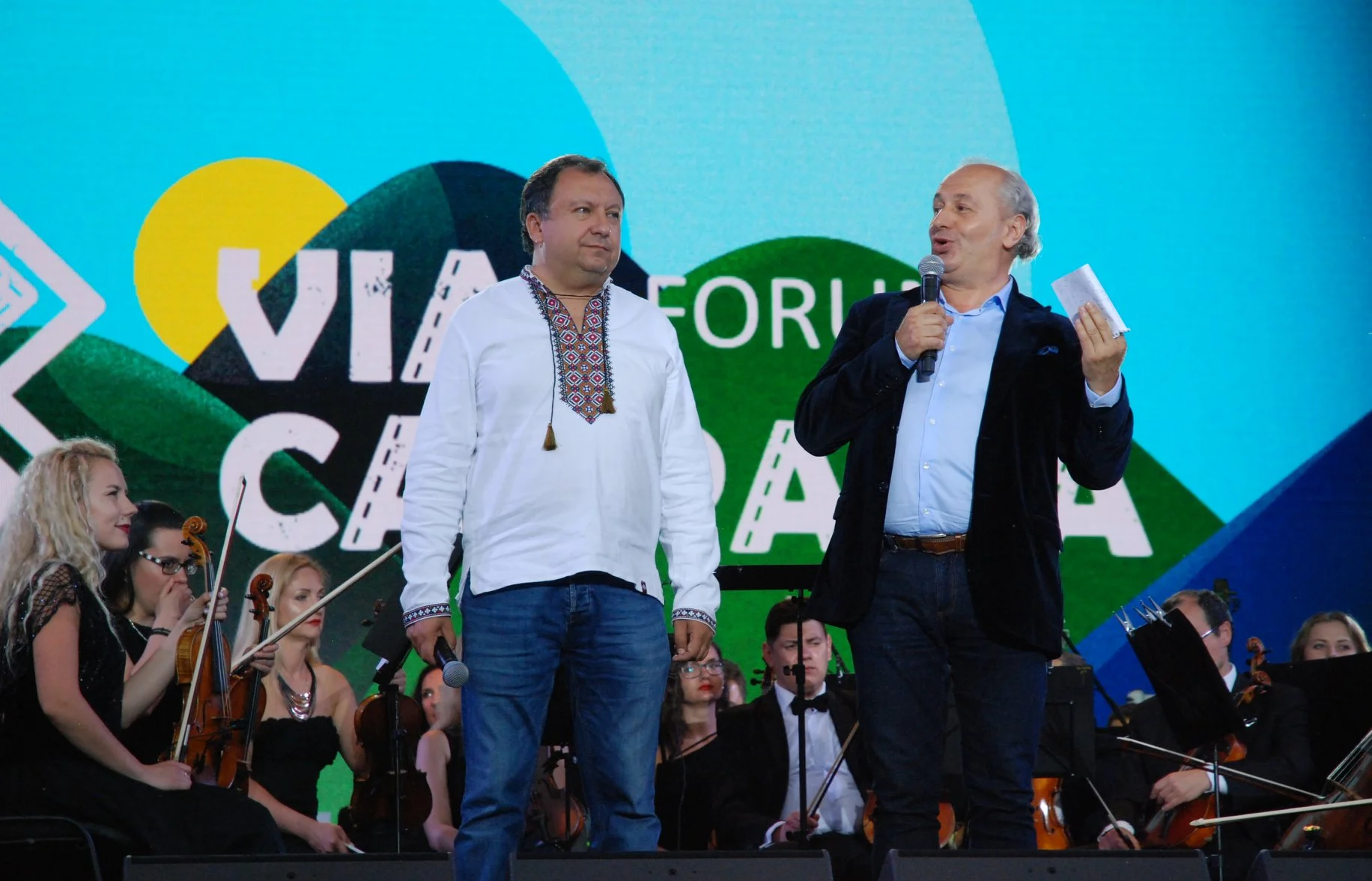
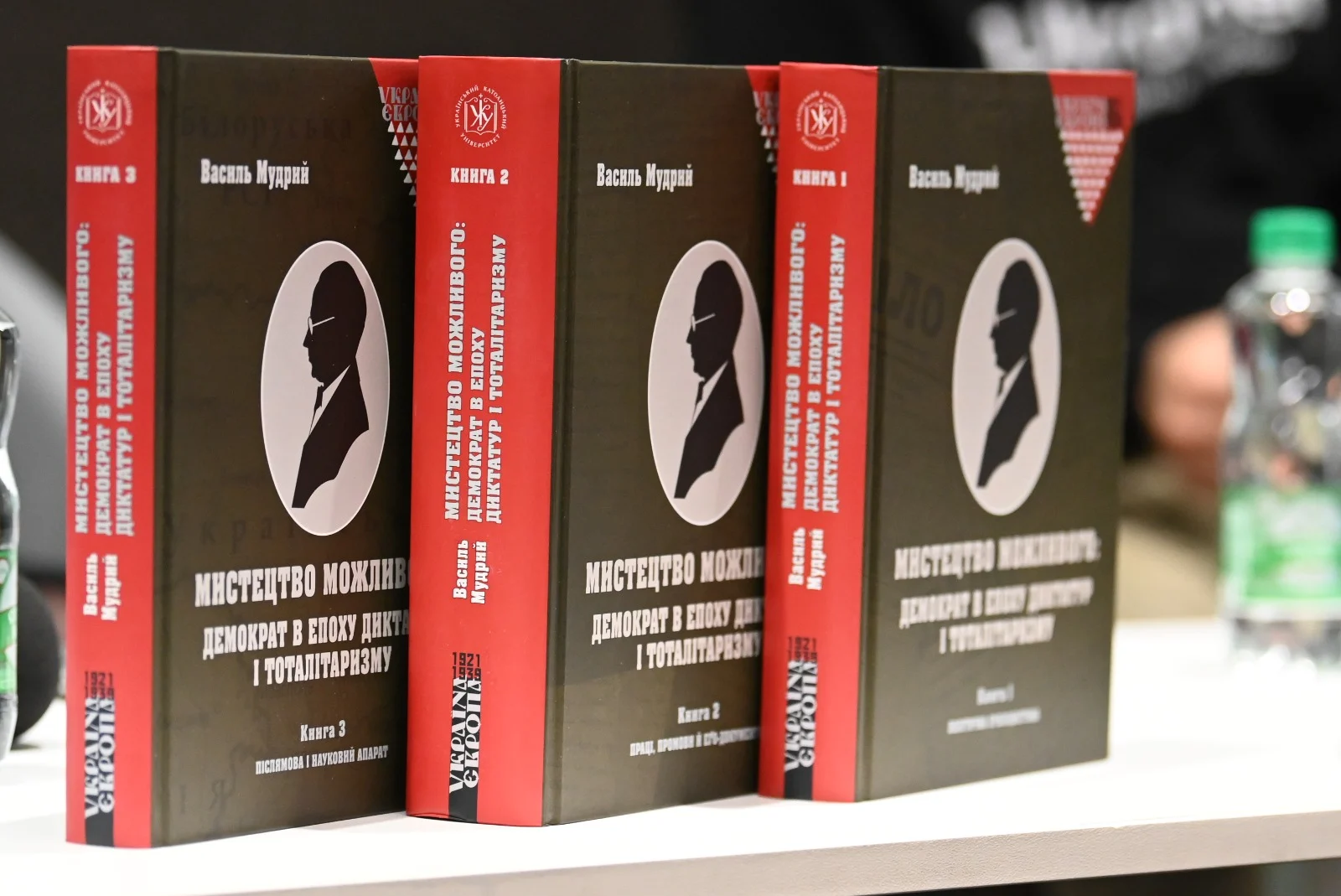
The Via Carpatia 2025 forum opened with the presentation of the documentary trilogy “The Art of the Possible: A Democrat in the Era of Dictatorships and Totalitarianism”
A large-scale edition dedicated to the figure of the outstanding Ukrainian Vasyl Mudry (1893–1966), who is one of the key figures of the Ukrainian political and public life of the interwar period. He was a deputy and vice-speaker of the Polish Diet, editor-in-chief of the newspaper “Dilo” and co-founder and chairman of UNDO.
The trilogy reveals his legacy in three areas of public activity – journalistic, political and public. The publication logically combines hundreds of journalistic materials, program documents, speeches, memories, photos and research comments.
This is the tenth book in the series “Ukraine. Europe: 1921–1939”, prepared under the scientific editorship of Ola Hnatiuk and published by the UCU publishing house.
The organizer of the trilogy, Ola Hnatiuk, said that she started studying the life and activities of Vasyl Mudry 21 years ago. Materials for the trilogy were collected in the archives of Ukraine, Poland, Austria, Great Britain, Canada, and the USA.
“Such books are a fascinating detective story that lasts 21 years. Archival work allows you to see the events of 80-100 years ago from a new perspective, to look at the political events that took place at that time in a different way, to rethink Ukrainian-Polish relations and the role of Ukrainian organizations,” she said.
Vasyl Mudryi was an opponent of the trend of “Sovietization” of Galicia and understood all the dangers of the Soviet regime for Ukrainians. It is significant that the NKVD started two forms on Vasyl Mudry at once – in the 1930s and after the war: they were also found in the archives.
Historian Yaroslav Hrytsak commented not only on the activities of Vasyl Mudryi, but also on the context of Polish-Ukrainian relations during this period.
“What the Poles did to the Ukrainians in the interwar period is stupidity. Instead of bringing them closer and having an ally in the fight against the Soviet regime, everything was done to distance the Ukrainians as far as possible,” Yaroslav Hrytsak noted, reflecting on the political events of the 1930s.
He also noted that Pilsudski was in favor of a Ukrainian-Polish federation, but most of the state apparatus came from the opponent’s camp, Dmowski. “And this is the devil of Polish politics. If we are talking about modernity, Polish-Ukrainian understanding did happen, but if Dmovskyi’s ghost appears in Polish politics, it is a threatening phenomenon,” Hrytsak said.
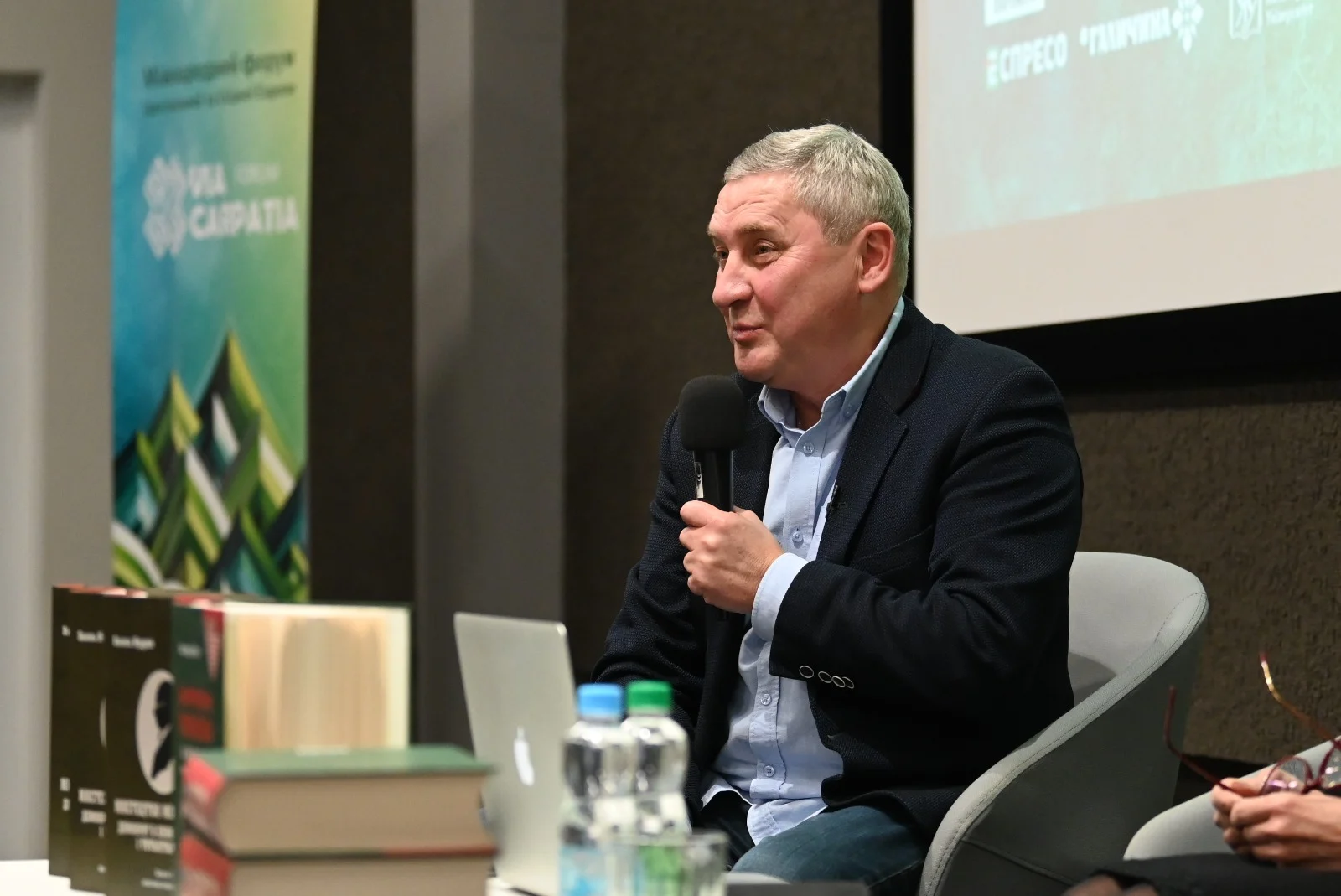
The participants of the presentation emphasized that Vasyl Mudryi and UNDO did not have any pro-German position, but on the contrary, focused on the democratic countries of Europe, such as Great Britain (instead, Soviet historiography emphasized the pro-German orientation of Ukrainian organizations, which is not true). In this sense, publishing the trilogy is a “weapon” against false historical statements and Russian propaganda. And also a reminder that the historical defeats of Poland are connected with the underestimation of the Ukrainian factor.
“The presentation of the three-volume “Legacy of Vasyl Mudryi” is an attempt to bring back the memory of one of the key figures of Ukrainian political and public life of the interwar period. Through his texts, we show the broader context of the history of Ukrainians in the Polish state: from work in parliament and journalism to Galicia’s response to the Holodomor in Soviet Ukraine,” commented Myroslav Cheh, Polish public figure, journalist of Ukrainian origin.
“The study of such figures as Vasyl Mudryi is important today, because Russia’s war against Ukraine is directly related to the attempt to return us to a distorted past. We show what history really was, and how Moscow tried to influence Ukrainian life for centuries – the forms change, but the essence of Russian policy remains the same,” he summarized.