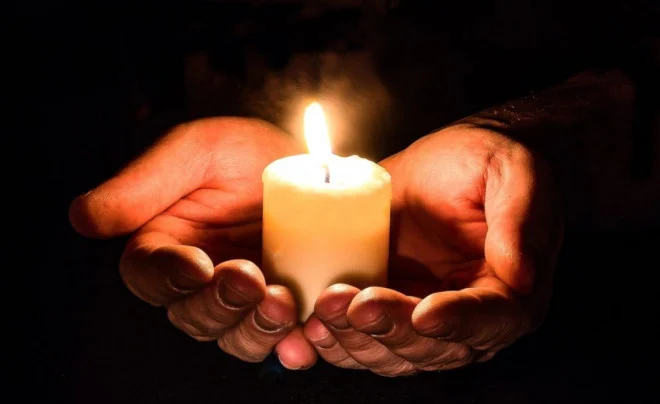
Today, Ukraine and the world commemorate the victims of the Holodomor. This memory unites Ukrainians in our country and in other countries where they live. It has become an important element of national identity
This memory is also important as a warning of what can happen to a nation that fails to protect its freedom. We have not forgotten the horrors of 1932-1933 and are now ready to defend our independence with weapons in hand.
The recognition of the Holodomor as a genocide of the Ukrainian people by the parliaments of other states and individual regions is very important, because it emphasizes the persistence of the war waged against Ukraine for centuries, first by the colonizers, and now by the aggressors. And it is extremely important for us that everything we do to honor the memory of the dead is heard not only by our citizens, but by the whole world.
Today, the information war continues around the topic of the Holodomor, and Russia still uses the key myths created by it as grounds for claiming Ukraine as a “failed state” and spreads it abroad.
These problems, as well as how Ukrainians restored memory and how they tell the world about the crime of genocide and at the same time communicate the criminal essence of totalitarianism and the need to protect human rights, will be discussed in a special project of the Liberation Movement Research Center, the Center for Strategic Communications and Information Security, the All-Ukrainian Democratic Forum NGO and the Espreso TV channel.
We hope that such a project will become another proof that Ukraine will always remember the Holodomor not only as one of the greatest tragedies of the Ukrainian people, but will also demonstrate the strength of our people and prevent the recurrence of similar crimes in the future.
On the 88th anniversary of the Holodomor in Ukraine, in memory of the millions who died, we offer viewers meaningful conversations:
Why is international recognition of the Holodomor important for Ukraine? What was the role of the diaspora in breaking the information blockade about the communist crime? At 5:05 p.m., we will talk about it with Maksym Mayorov, an expert at the Center for Strategic Communications and Information Security, Hanna Hopko, a public activist and journalist, and Oleksiy Haran, a professor at the Department of Political Science at the Ukrainian National Academy of Sciences.
How did Ukraine remember the Holodomor? How did society react to the discovery of the truth about the communist crime? What is the attitude of Ukrainians to this topic in the 30th year of independence? At 6:10 p.m., publicist Vitaliy Portnykov, MP, historian and researcher of KGB archives Volodymyr Vyatrovych and Tetiana Lyshnevets, executive director of the Holodomor Museum foundation, will talk about this.